Stress affects your microbiome through stress hormones and the nervous system. It can make the gut wall more permeable and shift some gut bacteria, and the link runs the other way too: substances made by your microbes can soften the body’s response to stress. The human evidence is still building, but there are already studies on food, breathing, movement and coffee that are worth knowing about.
How does stress affect the gut?
The best-studied effect is that stress makes the gut wall more permeable. When your body senses a threat, real or psychological, the brain activates the hypothalamic–pituitary–adrenal axis, and corticotropin-releasing hormone and cortisol are released.
In a Belgian study, 23 healthy volunteers gave a public speech while the researchers checked how permeable their small intestine was with a two-sugar test: the volunteers drink lactulose and mannitol, and the sugars are then measured in their urine. Under the stress of the speech, permeability almost doubled. The ratio of the two sugars in urine rose from 0.030 to 0.059. Indomethacin, an anti-inflammatory drug the researchers used for comparison, raised it to 0.071. The rise happened only in people whose cortisol went up.
Under stress the gut becomes more permeable
Lactulose/mannitol ratio in urine: the higher it is, the more permeable the small intestine. 23 healthy volunteers.
Without stress the ratio was 0.030, under the stress of a public speech 0.059, and with indomethacin, a comparison drug, 0.071. The rise with the speech occurred only in people whose cortisol went up.
Corticotropin-releasing hormone did the same on its own, given without any stress. When the researchers first gave a drug that calms mast cells, immune cells in the gut lining, permeability changed neither with the hormone nor with the speech. This suggests that stress acts on the gut through these cells.
Does stress change your gut bacteria?
Probably, but in people the picture is not yet clear. A review of 13 human studies, mostly in young adults, found that under higher stress some bacteria are less abundant and others more. In more than two of the studies, more stressed people had less Lachnospira, Phascolarctobacterium and Veillonella and more Methanobrevibacter and Roseburia. Most studies, however, found no difference in microbial diversity.
What is cause and what is effect is still unknown. The authors write that larger studies following people over time are needed to tell whether stress changes the bacteria or the bacteria influence stress.
There is evidence for the other direction too. When they ferment fibre, gut bacteria produce short-chain fatty acids such as acetate, propionate and butyrate. In another Belgian study, 66 healthy men received these acids delivered straight to the colon for a week, in amounts matching the fermentation of 10 or 20 g of fibre. Compared with placebo, their cortisol rose less under stress. Their mood, however, did not change.
What is the link between the gut, serotonin and mood?
The gut and the brain are connected in many ways, and serotonin is one of them. The body’s main source of serotonin is the enterochromaffin cells in the gut lining. Gut bacteria prompt them to make more, directly and through their own substances, including short-chain fatty acids and tryptamine. This serotonin does not reach the brain, though, because it cannot cross the blood–brain barrier, and the brain makes its own. You can read more in our article on the gut–brain axis.
Gut and mental health complaints often go together. According to an estimate cited in a 2022 review, nearly 60% of people diagnosed with anxiety or depression also report gut symptoms.
Nearly 6 in 10 people with anxiety or depression also have gut symptoms
According to an estimate cited in a 2022 review, nearly 60% of people diagnosed with anxiety or depression also report gut symptoms. The remaining ~40% is calculated as the difference.
Source: Legan et al., Neurogastroenterology & Motility, 2022 (PMID 35246905)
If you are dealing with anxiety or low mood, see a doctor or a psychologist. Food and habits help, but they do not replace treatment.
Can food reduce stress?
It may help, according to an Irish study. In it, 45 adults with poor eating habits were randomly split into two groups. One followed a “psychobiotic” diet rich in prebiotic fibre and fermented foods for 4 weeks. The other received only general advice based on the food pyramid.
Perceived stress fell by 32% in the first group and by 17% in the second. The difference between the groups was not statistically significant, but the more closely people followed the diet, the more their stress went down. The diet is simple to follow:
- 6–8 servings a day of fruit and vegetables rich in prebiotic fibre, such as onions, leeks, cabbage, apples, bananas and oats;
- 5–8 servings a day of grains;
- 3–4 servings a week of pulses;
- 2–3 servings a day of fermented foods, such as sauerkraut, kefir or kombucha, with one serving being 200 ml or one cup;
- fewer sweets, less fast food and fewer sugary drinks.
In a Stanford study, 18 healthy adults gradually increased fermented foods from an average of 0.4 to 6.3 servings a day over 10 weeks. The diversity of their gut bacteria increased, and 19 of 93 inflammatory proteins measured in their blood went down. Among them was interleukin-6, which is also raised in chronic stress. Perceived stress in this study, however, did not change. Which fermented foods contain live bacteria, you will find in our article on 10 probiotic foods.
Do probiotics help with stress?
Maybe a little, but the evidence is not yet strong enough for a recommendation. A 2026 review of 12 controlled trials with 3,350 healthy working adults found a small effect of probiotics on symptoms of stress, anxiety and low mood, and slightly lower cortisol. C-reactive protein, a blood marker of inflammation, did not change. Strains, doses and durations varied, so the authors call the result preliminary.
Probiotics are food supplements, not a treatment for anxiety or depression. If you are considering one, ask a doctor or pharmacist, especially if you take medication.
What can you do about stress?
Start with the habits that have been studied in people:
- Eat more plant foods and fermented foods, as in the psychobiotic diet above. In the study, the benefit was greater in those who followed it more closely.
- Breathe slowly for 5 minutes a day. In another Stanford study, with 108 people, 5 minutes of “cyclic sighing” a day for a month improved mood more than the same time spent on meditation and slowed their breathing. Breathe in slowly through your nose, add one more short inhale to fill your lungs, then breathe out slowly and fully through your mouth.
- Move. In a summary of 97 reviews covering more than 128,000 people, physical activity reduced symptoms of anxiety, depression and psychological distress, and more intense activity helped more.
- Protect your sleep and have your last coffee at least 8–9 hours before bed. The next section explains why.
- Get help in time. If anxiety or low mood does not pass, talk to a doctor or a psychologist.

When should you have your last coffee if you are stressed?
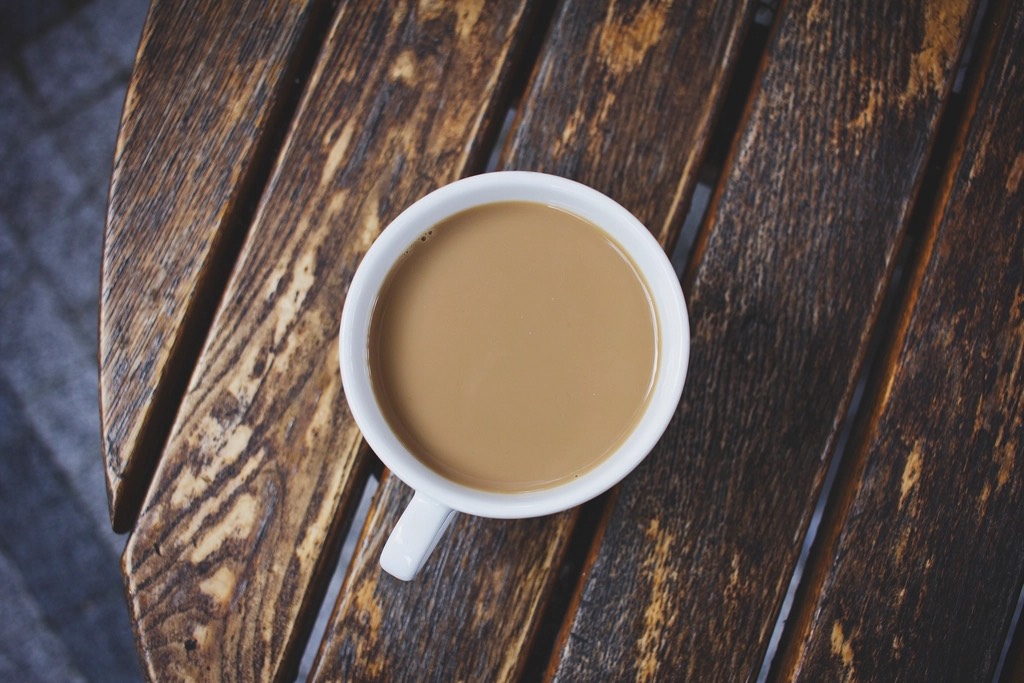
At least 8–9 hours before bed. In a review of 24 studies, caffeine cut sleep by an average of 45 minutes and deep sleep by about 11 minutes. Falling asleep took 9 minutes longer on average. According to the authors, a 250 ml cup of coffee with about 107 mg of caffeine should be drunk at least 8.8 hours before bed so that it does not shorten sleep. If you go to bed at 11 pm, that means your last coffee at around 2 pm.
What does the BugSpeaks gut test show when you are under stress?
It shows 9 things in your gut that relate to stress and to the studies in this article, from how strong your gut barrier is according to your microbes to their potential for serotonin and butyrate. Here they are, as they appear in the gut test report:
- “Leaky Gut Potential” in the “Health Indicators” section: how strong your gut barrier is according to your microbes, that is, whether the microbes that strengthen it or those that weaken it dominate, on a 3-level scale (low, moderate and high). In the Belgian study, the stress of a public speech almost doubled gut permeability.
- “Potential Gut Inflammation” in the same section: whether microbes linked to inflammation or beneficial microbes that produce short-chain fatty acids dominate in your gut, on the same scale. In the Stanford study, fermented foods lowered 19 inflammatory proteins, including interleukin-6, which is also raised in chronic stress.
- “Short Chain Fatty Acid (SCFA) Production Potential”: your microbes’ potential to produce butyrate, acetate, propionate and 6 other such acids, on a 3-zone scale (low potential, optimal potential and above optimal). In the study with 66 healthy men, these acids blunted the rise in cortisol under stress.
- “Neurotransmitter Production Potential”: your microbes’ potential for 10 substances, including serotonin, tryptamine, GABA, dopamine, adrenaline and noradrenaline, on the same scale. Gut bacteria prompt the cells of the gut lining to make serotonin, and tryptamine is one of the substances they use to do it.
- “Shannon Diversity”: how diverse your microbes are compared with reference groups of healthy people from different parts of the world, on a 3-zone scale. Under stress the findings on diversity are mixed, while fermented foods increased it in the Stanford study.
- “Kingdom Distribution”: what share of your microbes are bacteria, archaea, fungi, eukaryotes and viruses, on a 7-zone balance scale, and in “Top 5 Abundant Species” you see which archaea you have the most of. In the review of 13 studies, more stressed people had more Methanobrevibacter, a genus of methane-producing archaea.
- “Foundation Microbiota”: the share of 36 foundation species, including Faecalibacterium prausnitzii and three Roseburia species, which produce butyrate, on a 7-zone scale.
- “Probiotic Characterization”: which of 42 probiotic species you carry and how much, including the bacteria in fermented foods, such as Lactobacillus bulgaricus and Streptococcus thermophilus from yoghurt and Lactiplantibacillus plantarum from sauerkraut. In the “Probiotic Supplementation Summary”, each species is marked with whether to consider a supplement, carry on as you are or avoid one. In the review of 12 trials on stress, strains and doses varied and the results differed.
- “Nutrition Recommendations”: a 12-week plan in 3 phases with about 250 foods in 11 groups, each labelled with how often to eat it in each phase: every day, every other day, once every 3 days or avoid as far as possible. The tables include the foods of the psychobiotic diet: onion, leek, cabbage, apples, bananas, oats, sauerkraut, kefir and kombucha.
This is how the serotonin potential looks in the report
example values- Sample report
- 34
- below the optimal range
- Optimal potential
- 46–66
- from the reference groups
- The scale
- 3 zones
- low, optimal, above optimal
An example from the sample gut test report: the microbes’ potential for serotonin is 34, below the optimal range of 46–66 (values rounded). The range comes from reference groups of healthy people from different parts of the world. This is the microbes’ potential based on their genes, not the level of serotonin in your body.
Source: BugSpeaks gut test sample report (anonymised), “Neurotransmitter Production Potential” section
The data as a table
| Serotonin potential | |
|---|---|
| sample report | 34 |
| Optimal potential | 46–66 |
The plan also comes with an hour-by-hour menu for each phase, with 7 meals and three options for each. Coming soon: the personalised probiotic, a fully individual probiotic formula with live bacterial cultures, created specifically for you based on the probiotic species missing from your gut test.
The test does not measure stress and is not part of treating it. This is information about your microbes, not a diagnosis. If you are dealing with anxiety or low mood, see a doctor or a psychologist.
In short:
- Stress can make the gut more permeable: in one study, giving a public speech almost doubled the permeability of the small intestine.
- In people, stress goes along with changes in some bacteria, but usually not in their diversity.
- The link runs both ways: short-chain fatty acids made by gut microbes blunted the rise in cortisol under stress.
- More fibre and fermented foods, 5 minutes of slow breathing a day, movement and a last coffee at least 8–9 hours before bed are the habits that have been studied in people.
- The BugSpeaks gut test shows 9 things related to stress, from leaky gut potential to serotonin and butyrate, and the 12-week plan arranges your foods around them.
This article is for educational purposes and does not replace advice from a doctor.
Sources (10)
- [1]Vanuytsel T, van Wanrooy S, Vanheel H et al., 2014. Psychological stress and corticotropin-releasing hormone increase intestinal permeability in humans by a mast cell-dependent mechanism. Gut.
- [2]Ma L, Yan Y, Webb RJ et al., 2023. Psychological Stress and Gut Microbiota Composition: A Systematic Review of Human Studies. Neuropsychobiology.
- [3]Dalile B, Vervliet B, Bergonzelli G et al., 2020. Colon-delivered short-chain fatty acids attenuate the cortisol response to psychosocial stress in healthy men: a randomized, placebo-controlled trial. Neuropsychopharmacology.
- [4]Legan TB, Lavoie B, Mawe GM, 2022. Direct and indirect mechanisms by which the gut microbiota influence host serotonin systems. Neurogastroenterology & Motility.
- [5]Berding K, Bastiaanssen TFS, Moloney GM et al., 2023. Feed your microbes to deal with stress: a psychobiotic diet impacts microbial stability and perceived stress in a healthy adult population. Molecular Psychiatry.
- [6]Wastyk HC, Fragiadakis GK, Perelman D et al., 2021. Gut-microbiota-targeted diets modulate human immune status. Cell.
- [7]Ben Fredj S, Kechiche H, Chouchen A et al., 2026. Probiotic intake and mental health in healthy working adults: a systematic review and meta-analysis of randomized controlled trials. BMC Psychology.
- [8]Balban MY, Neri E, Kogon MM et al., 2023. Brief structured respiration practices enhance mood and reduce physiological arousal. Cell Reports Medicine.
- [9]Singh B, Olds T, Curtis R et al., 2023. Effectiveness of physical activity interventions for improving depression, anxiety and distress: an overview of systematic reviews. British Journal of Sports Medicine.
- [10]Gardiner C, Weakley J, Burke LM et al., 2023. The effect of caffeine on subsequent sleep: A systematic review and meta-analysis. Sleep Medicine Reviews.