The foods we call probiotic are fermented foods with live bacteria: natural yoghurt, kefir, unpasteurised sauerkraut, pickles fermented without vinegar, most cheeses, boza, kimchi and most kombuchas. Sourdough bread and pasteurised vegetables have no live bacteria. Here are the foods worth eating and what the studies show.
Is every fermented food a probiotic?
No. According to the international scientific consensus, probiotics are live microorganisms that, in adequate amounts, confer a health benefit. A fermented food is made with the help of microbes, but after baking, pasteurisation or filtering, not a single live one may remain. Scientists from the International Scientific Association for Probiotics and Prebiotics sort foods into three groups:
- with live microbes: yoghurt, sour cream, kefir, most cheeses, miso, tempeh, fermented vegetables and salami that have not been heat-treated, boza and most kombuchas;
- fermented but without live microbes: bread, pasteurised or cooked fermented vegetables, soy sauce, vinegar, some kombuchas, wine and most beers;
- not fermented at all: vegetables preserved only with vinegar or brine without fermenting, bread made with baking powder and chemically produced soy sauce.
That is why scientists suggest the phrase “contains live and active cultures” for fermented foods with live microbes, and the word “probiotic” only when the benefit of those exact strains has been shown in studies. In Canada, for example, a food can be called “probiotic” if it delivers at least 1 billion live bacteria of certain lactobacilli and bifidobacteria species per serving.
Which 10 fermented foods contain live bacteria?
The ones that are not pasteurised or heated after fermentation. Traditional fermented foods usually contain between 1 million and 1 billion live microbes per gram, and a single serving of yoghurt or kefir can hold up to 100 billion lactic acid bacteria.
- Natural yoghurt. It is made with Lactobacillus bulgaricus and Streptococcus thermophilus. In the EU, yoghurt may state that its live cultures improve lactose digestion in people who have trouble digesting lactose only if it contains at least 100 million live bacteria of these two species per gram. Check the label for live cultures and do not confuse it with milk drinks.
- Kefir. Up to 50 bacterial and yeast species have been found in kefir made with grains. Industry rarely uses the grains and adds ready-made mixes of bacteria and sometimes yeasts instead, so shop-bought kefir usually contains fewer species.
- Sauerkraut, unpasteurised. The cabbage ferments in salt with the bacteria that live on it, most often Leuconostoc, Lactobacillus and Pediococcus. Pasteurised sauerkraut from the shop has no live bacteria.
- Pickles fermented without vinegar. Cucumbers, beetroot or cabbage that sour on their own in brine contain live bacteria. Vinegar pickles and those boiled in jars do not.
- Cheese. Most cheeses contain live bacteria.
- Boza. A fermented cereal drink that the scientists behind the international consensus list among foods with live microbes.
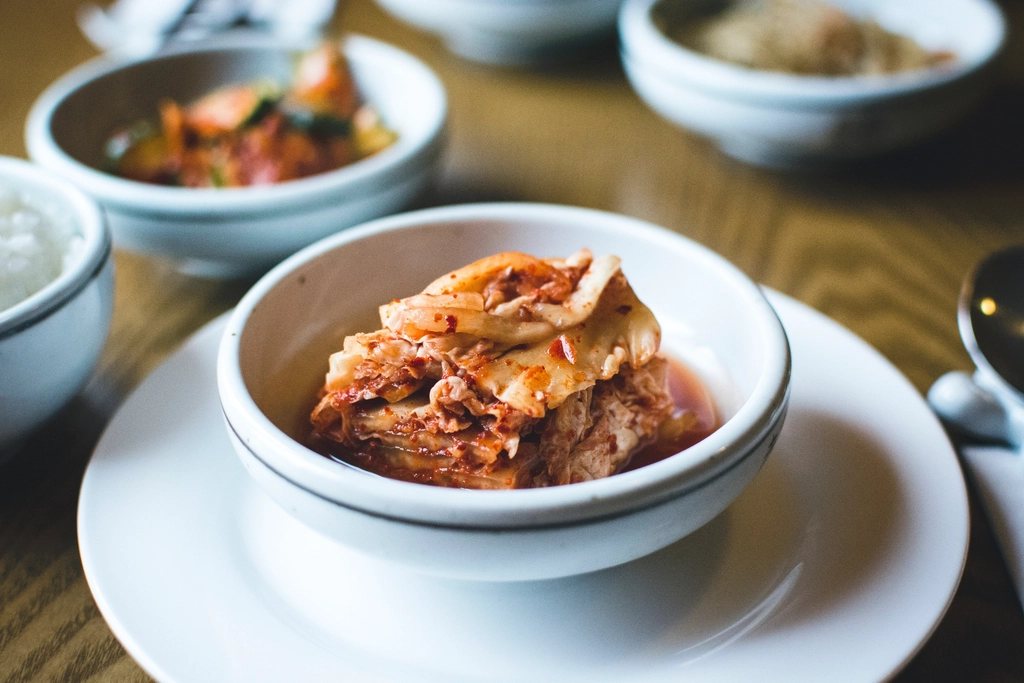
- Kimchi. A Korean fermented side dish, most often cabbage with chilli, garlic and ginger, with bacteria such as Leuconostoc, Weissella and Lactobacillus. It is quite salty, so eat it in moderation.
- Kombucha. Fermented tea with acetic acid bacteria, lactic acid bacteria and yeasts. Most kombuchas contain live microbes, but some are pasteurised, and their benefits have been studied mainly in the lab and in animals.
- Miso and tempeh. Fermented soy: miso with the mould Aspergillus oryzae and tempeh with Rhizopus mould. Both contain live microbes, but boiling or frying kills them.
- Sourdough bread. It often makes lists like this, but its bacteria die during baking. Fermentation does break down phytate in the flour, so the body absorbs more calcium, iron and zinc from this bread.
What does Bulgaria have to do with yoghurt?
A lot: one of the two bacteria in yoghurt is called Lactobacillus bulgaricus. In the 20th century, the Bulgarian medical student Stamen Grigorov linked the benefits of yoghurt to the lactic acid bacteria in it. Today yoghurt is made with two precisely defined bacteria: Lactobacillus bulgaricus and Streptococcus thermophilus.
In the early 1900s, Élie Metchnikoff linked the long lives of Bulgarian villagers to their regular intake of fermented dairy foods such as yoghurt. He believed that lactobacilli counteract putrefaction in the gut, which in his view led to illness and ageing. His idea is more than a century old.

Do bacteria from food reach the gut?
They do, but usually in small amounts and not for long. An analysis of 9,445 samples from the human microbiome, most of them from the gut, found them in many people. The most common was Streptococcus thermophilus from yoghurt: in 31.2% of gut samples, and in 39.6% in Europe. When present, however, it made up on average only 0.6% of the bacteria in the sample.
The yoghurt bacterium turns up in the gut of almost one in three people
Share of gut samples that contain the species. L. bulgaricus is a subspecies of L. delbrueckii, for which the analysis gives 3–5%.
Streptococcus thermophilus was found in 31.2% of gut samples, Lactococcus lactis in 16.3%, Lactobacillus delbrueckii in 3–5% and Lactiplantibacillus plantarum in 1.8%. When present, each usually made up less than 1% of the sample.
Source: Pasolli et al., Nature Communications, 2020 (PMID 32451391)
The consensus scientists estimate that lactic acid bacteria from food temporarily make up between 0.1% and 1% of the bacteria in the large intestine. They usually do not stay long, but while they pass through, some of them are active.
What happens in your gut when you eat more fermented foods?
Bacterial diversity goes up. In a Stanford study, 18 healthy adults gradually increased fermented foods from an average of 0.4 to 6.3 servings a day over 10 weeks. The diversity of their gut bacteria rose and stayed higher even afterwards, when they ate less. The new bacteria hardly came from the food, though: at most 5.4% of them matched microbes in the fermented foods. The food seems to have changed conditions for their own bacteria.
In the same study, 19 of 93 inflammatory proteins measured in the blood went down, including interleukin-6. In the group that ate lots of fibre, diversity did not change.
A 2025 review of 25 studies with 4,328 healthy adults shows that fermented foods improve bowel movements, stool consistency and digestive complaints such as bloating and wind. The certainty of the evidence, however, is mostly low.
How much fermented food should you eat?
There is no official amount: most countries’ dietary guidelines do not list fermented foods as a group of their own. In the Stanford study, people increased their servings gradually over the first 4 weeks and by the end were eating about 6 servings a day on average. One serving there was about 180 ml of yoghurt, kefir or kombucha, or a quarter cup of sauerkraut or kimchi.
Start slowly. In the same study, some people had more bloating in the first weeks, which later passed.
Who should be careful with fermented foods?
People who react to histamine and those who watch their salt or alcohol. When cheese, meat, vegetables, soy and wine ferment, some lactic acid bacteria form histamine, tyramine and other biogenic amines. In people who do not break them down well, they can trigger headaches, even migraines. The salt in kimchi and soy sauce and the alcohol in beer and wine also call for moderation.
If you have an illness or a weakened immune system, ask your doctor which fermented foods are right for you.
Probiotics from food or from capsules?
They are different things. Fermented foods bring live microbes and substances formed during fermentation, while capsules are food supplements with specific strains and widely varying composition and quality. If you are considering a supplement, ask a doctor or pharmacist.
What feeds your beneficial bacteria?
Prebiotic fibre that you cannot digest yourself. In a review of 64 studies with 2,099 healthy adults, fibre increased bifidobacteria and lactobacilli in the gut, most strongly fructans and galacto-oligosaccharides. It also slightly raised butyrate in stool but did not change microbial diversity. Here is where to find it:
- onion, garlic, leek: fructans, a favourite of bifidobacteria;
- green bananas, oats: resistant starch;
- beans, chickpeas, lentils: galacto-oligosaccharides;
- artichoke, asparagus, chicory: inulin.
What does the BugSpeaks gut test show about probiotic bacteria?
It shows 11 things related to fermented foods: which of their bacteria already live in your gut, how your beneficial bacteria are fed and how often to eat each fermented food. Here they are, as they appear in the gut test report:
- “Probiotic Characterization”: which of 42 probiotic species live in your gut and how much of them, on a 7-zone balance scale. They include bacteria from this list: Lactobacillus bulgaricus and Streptococcus thermophilus from yoghurt, Lactiplantibacillus plantarum from sauerkraut, Leuconostoc mesenteroides, found in kimchi and kefir, and Lactococcus lactis.
- “Probiotic Supplementation Summary”: for each of the 42 species, the report notes whether to consider a supplement, carry on as you are or avoid one. Capsules vary widely, so it helps to know which species you already have.
- “Foundation Microbiota”: the share of 36 foundation species, including Bifidobacterium adolescentis and B. longum, Faecalibacterium prausnitzii and three Roseburia species, on a 7-zone scale. Fibre increased bifidobacteria, and 210 g of kimchi a day for 4 weeks increased Faecalibacterium and Roseburia, which produce butyrate.
- “Shannon Diversity”: how diverse your microbes are compared with reference groups of healthy people from different parts of the world, on a 3-zone scale. In the Stanford study, fermented foods increased diversity and fibre did not.
- “Short Chain Fatty Acid (SCFA) Production Potential”: your microbes’ potential to produce butyrate and 8 other such acids, on a 3-zone scale. In the review of 64 studies, fibre slightly raised butyrate.
- “Carbohydrate Metabolism Potential”: how many of your microbes break down carbohydrates, including the fibre you cannot digest yourself. Prebiotics are food for exactly these microbes.
- “Mineral Bioavailability Potential” in the “Gut Function” section: the balance between microbes that release iron, zinc and calcium from plant foods and those that compete with your body for iron. Sourdough works in a similar way, breaking down phytate in the flour.
- “Lactose Intolerance Management”: whether your microbes tend to help or hinder the breakdown of lactose, on a 2-zone scale. In the EU, the claim that live cultures in yoghurt improve lactose digestion in people who have trouble digesting lactose is approved.
- “Histamine Sensitivity Management”: the balance between microbes that release histamine and those that break it down, on the same scale. Some fermented foods are rich in histamine.
- “Potential Gut Inflammation” in the “Health Indicators” section: whether microbes linked to inflammation or beneficial microbes that produce short-chain fatty acids dominate in your gut, on a 3-level scale (low, moderate and high). In the Stanford study, fermented foods lowered 19 inflammatory proteins.
- “Nutrition Recommendations”: a 12-week plan in 3 phases. The roughly 250 foods in 11 groups include kefir, yoghurt, cheese, sauerkraut, kimchi, tempeh and kombucha, and for each you see how often to eat it in each phase: every day, every other day, once every 3 days or avoid as far as possible.
This is how butyrate potential looks in the report
example values- Sample report
- 62
- within the optimal range
- Optimal potential
- 60–72
- from the reference groups
- The scale
- 3 zones
- low, optimal, above optimal
An example from the sample gut test report: the microbes’ potential for butyrate is 62, within the optimal range of 60–72 (values rounded). The range comes from reference groups of healthy people from different parts of the world. A repeat test shows how it changes.
The data as a table
| Butyrate potential | |
|---|---|
| sample report | 62 |
| Optimal potential | 60–72 |
The middle, 8-week phase of the plan is about building up beneficial microbes with prebiotics and probiotics from food. The plan also comes with an hour-by-hour menu for each phase, with 7 meals and three options for each.
The nutrition plan runs in three phases
The first 2 weeks are a restart, the next 8 rebuild with prebiotics and probiotics from food, and the last 2 are for maintaining. About 250 foods in 11 groups are labelled with how often to eat them in each phase.
Source: BugSpeaks gut test sample report, “Nutrition Recommendations” section
If you want a probiotic chosen from your own results rather than from the label on the box, you will soon be able to order the BugSpeaks personalised probiotic. It will be selected from a few ready-made formulas based on what your gut test shows, and the course lasts 12 weeks, as long as the nutrition plan. It is a food supplement with live bacterial cultures.
This is information about your microbes, not an intolerance or allergy test and not a diagnosis.
In short:
- Live bacteria are found in natural yoghurt, kefir, unpasteurised sauerkraut, pickles fermented without vinegar, most cheeses, boza and most kombuchas. Sourdough bread and pasteurised vegetables have none.
- Bacteria from food do reach the gut, but usually make up a small share: Streptococcus thermophilus turns up in 31.2% of gut samples.
- Ten weeks of eating more fermented foods increased gut bacterial diversity. Start slowly.
- The BugSpeaks gut test shows 11 things related to fermented foods, from the 42 probiotic species to diversity and butyrate potential, and the 12-week plan tells you how often to eat each food.
This article is for educational purposes and does not replace advice from a doctor.
Sources (10)
- [1]Marco ML, Sanders ME, Gänzle M et al., 2021. The International Scientific Association for Probiotics and Prebiotics (ISAPP) consensus statement on fermented foods. Nature Reviews Gastroenterology & Hepatology.
- [2]Dimidi E, Cox SR, Rossi M, Whelan K, 2019. Fermented Foods: Definitions and Characteristics, Impact on the Gut Microbiota and Effects on Gastrointestinal Health and Disease. Nutrients.
- [3]Nejati F, Junne S, Neubauer P, 2020. A Big World in Small Grain: A Review of Natural Milk Kefir Starters. Microorganisms.
- [4]Commission Regulation (EU) No 432/2012 of 16 May 2012 establishing a list of permitted health claims made on foods (live yoghurt cultures and lactose digestion).
- [5]Fisberg M, Machado R, 2015. History of yogurt and current patterns of consumption. Nutrition Reviews.
- [6]Gasbarrini G, Bonvicini F, Gramenzi A, 2016. Probiotics History. Journal of Clinical Gastroenterology.
- [7]Pasolli E, De Filippis F, Mauriello IE et al., 2020. Large-scale genome-wide analysis links lactic acid bacteria from food with the gut microbiome. Nature Communications.
- [8]Wastyk HC, Fragiadakis GK, Perelman D et al., 2021. Gut-microbiota-targeted diets modulate human immune status. Cell.
- [9]Mukherjee A, Farsi DN, Garcia-Gutierrez E et al., 2025. Impact of fermented foods consumption on gastrointestinal wellbeing in healthy adults: a systematic review and meta-analysis. Frontiers in Nutrition.
- [10]So D, Whelan K, Rossi M et al., 2018. Dietary fiber intervention on gut microbiota composition in healthy adults: a systematic review and meta-analysis. American Journal of Clinical Nutrition.