
Help centre
Frequently asked questions
Everything about the tests, the sample, the report, the nutrition plan and ordering — in one place. Pick a topic or browse by category.
General questions
BugSpeaks is a microbiome profiling platform built on shotgun metagenomic sequencing — a method that reads all the DNA in the sample, in far more detail than 16S tests. The product is developed by Leucine Rich Bio (India), and BugSpeaks Bulgaria is its official representative for Bulgaria and the Balkans. The test shows which microorganisms live in you and what they produce, and turns that into concrete, personalised recommendations.
The microbiome is the community of trillions of bacteria, fungi and viruses living in your body — mainly in the gut. They influence digestion, immunity, energy, mood and metabolism. An imbalance is associated with complaints such as bloating, fatigue and skin problems.
For anyone who wants data instead of guesswork about their diet: which microbes live in your gut, what they can produce and how to feed them. The test is not a medical examination — if you have complaints, see a doctor first.
A test for a child under 18 is ordered by a parent or guardian, who fills in the questionnaire and gives consent for the child's health data; the report is in the parent's account. We do not recommend the test for children under 6 unless their doctor recommends or agrees to it — until that age the microbiome is still forming and changes quickly, so the result is hard to interpret.
No. BugSpeaks is a wellness product: it shows the composition and functions of your microbiome and gives nutrition guidance. It does not diagnose, does not detect disease and does not replace a medical examination. If you have health complaints, see a doctor.
The whole report, the platform and our support are in plain Bulgarian.
Gut microbiome test
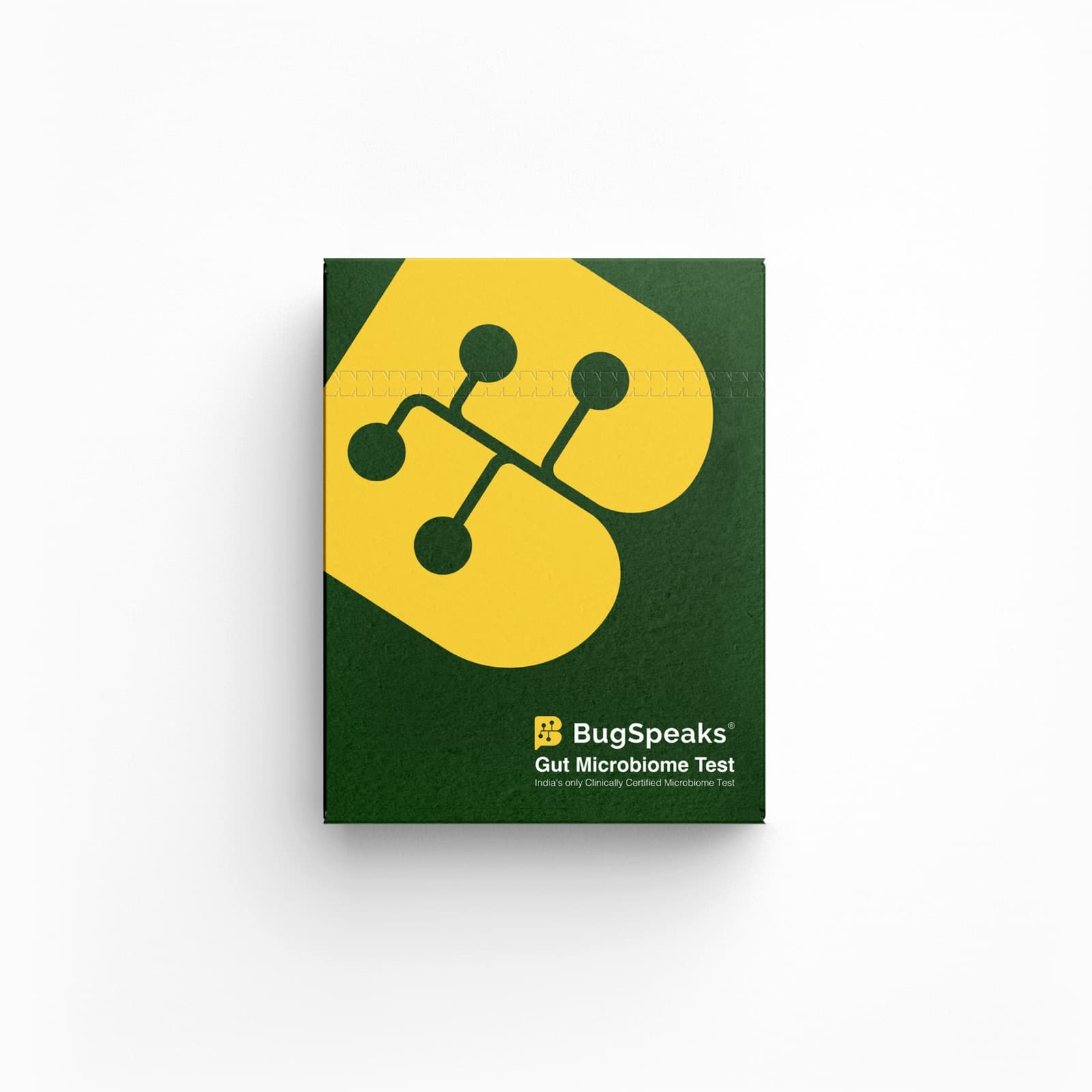
A detailed, species-level profile of your gut microbiome: production of short-chain fatty acids (butyrate included), the potential for 10 neurotransmitters, vitamin synthesis, macronutrient metabolism, microbial diversity, opportunistic microbes, antibiotic resistance genes, gut function, five health indicators (fatigue, gut barrier, inflammation, TMAO and microplastics) and how closely your microbes resemble those seen in 8 common conditions, such as type 2 diabetes and hypertension. It all comes together in the Rych Index™ and a personalised 12-week nutrition plan.
A single, easy-to-read score for the state of your microbiome, from 0 to 100, that condenses dozens of indicators into one number. You can follow it over time with a repeat test and see objectively how it changes.
No — and that matters. An intolerance is a condition of the body and is diagnosed by a doctor (for example with a breath test or a coeliac test). The report shows something else: the potential of your gut microbes to break down lactose, fructose, gluten and histamine. That is exactly what the 12-week plan uses to arrange your foods.
Two things: how well your microbiome can recover after antibiotics, and which resistance genes to 90 antibiotics your gut bacteria carry — the so-called resistome. This is information about the microbiome, not an antibiogram: it does not show whether a treatment will work and is not for choosing an antibiotic.
Which microbes live in your gut, what they can produce — vitamins, short-chain fatty acids, neurotransmitters — how they break down food, which beneficial species are under-represented, whether your microbes help you against fatigue and how strong your gut barrier is according to them. Plus a 12-week nutrition plan calculated from that data. The test is not intended for complaints and does not treat them; if you have complaints, see a doctor.
Because the report shows which probiotic species already live in your gut and which are under-represented. So the choice — of foods and of supplements — is based on data, not guesswork.
Great — but is it matched to your microbiome? Everything you eat passes through the gut, where microbes process it. Different microbes turn the same foods into different substances — helpful or not. That is why the same “healthy” food works differently for different people. The plan from the test is calculated from your microbiome, not from general rules.
Skin microbiome test
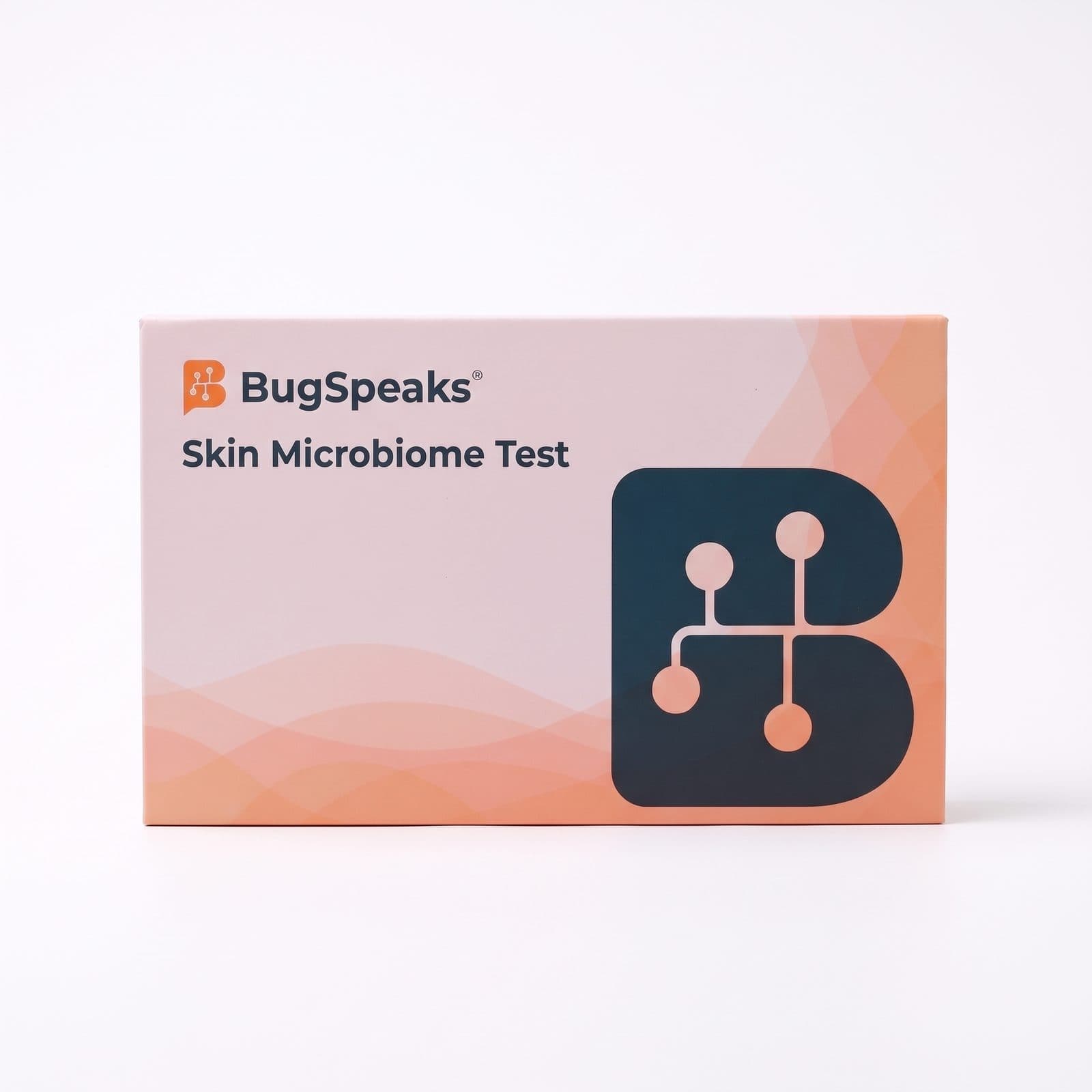
An analysis of the microbes on the skin of your face. The report scores 11 skin traits from 0 to 100, combined into 5 summary scores: barrier, hydration, sensitivity, recovery and ageing. It also shows the diversity of your microbes and 37 opportunistic species, and ends with personal recommendations for skincare and foods.
The link between the gut and the skin — the so-called gut–skin axis — is an active area of research. So if you care about your skin, it makes sense to look at your gut microbiome as well, for a fuller picture.
At home, with the swab in the kit and following the instructions: in the morning, right after you get up, before you wash your face. The evening before, wash your face only with water or a mild cleanser and apply nothing afterwards. The swab itself takes about 2 minutes.
Other products
We have a vaginal test, not an oral one yet. The vaginal test shows 34 traits in 7 sections compared with healthy women, with separate references before and after menopause. The oral test is in preparation.
The personalised probiotic is in preparation and not on sale yet. It will be a food supplement: a fully individual probiotic formula with live bacterial cultures, created specifically for you based on the probiotic species missing from your gut test.
Sample and analysis
You receive the kit at home by courier. You take the sample with the device provided — it takes around 5 minutes. You place it in the container with preservative and send it back to us with Econt, free of charge. No fasting or special preparation is needed.
Within 16 working days of receiving your sample — if you ticked the box at checkout to start the analysis straight away. Without it, we send the sample to the lab once the 14-day withdrawal period has ended, and the 16 days run from then. You get an email as soon as the report is ready in your account.
Shotgun metagenomic sequencing — it reads all the DNA in the sample (bacteria, archaea, fungi, viruses), whereas older 16S methods read only a section of a single bacterial gene. That is how it reaches species level and shows not only which microbes you have but also what they can produce.
The analysis is performed in the Leucine Rich Bio laboratory in India — shotgun metagenomic sequencing to species level. Your results are compared with reference groups of healthy people from different parts of the world, so you can see exactly where you stand.
With reference groups of healthy people from different parts of the world, not with people from a single country. That shows where each indicator sits compared with healthy people. The comparison is a guide for diet and lifestyle, not a norm or a diagnosis.
In the method. Microbiome tests are done in three main ways. PCR panels look for preselected bacteria using a few dozen DNA markers. 16S rRNA tests read a section of a single bacterial gene and usually reach the genus. Shotgun metagenomic sequencing, which we use, reads all the DNA in the sample (bacteria, archaea, fungi and viruses) to species level. It compares it with a reference base of 247,728 genomes and also shows the potential of your microbes, for example for vitamins and short-chain fatty acids, along with their antibiotic resistance genes. You get a 48-page report and a 12-week nutrition plan based on your microbes.
Take the sample during a period that is typical for you, without special preparation. If you have recently taken antibiotics, the result will reflect that — for a more representative picture some people wait a few weeks after the course.
Report and results
48 pages of personalised analysis: the Rych Index™, short-chain fatty acid production, neurotransmitters and vitamins, breakdown of lactose, fructose, gluten and histamine, macronutrient metabolism, microbial diversity, opportunistic microbes, antibiotic resistance genes, five health indicators, similarity to the microbiome in 8 common conditions, probiotic species recommendations — and a 12-week nutrition plan.
Yes. A real report with all personal data removed — name, age, sample number and dates. Download it from the home page or the gut test page.
Start with the summary and the Rych Index™ for the overall picture, then go through the individual indicators. Every indicator is explained in accessible language and comes with recommendations on what to do.
No. The test is not a microbiological culture and not a test for infection or parasites. The report shows the relative share of microbes that are usually present only in small amounts in healthy people — information about the balance of the microbiome, not about infection. If you have complaints, see a doctor.
On published scientific evidence. The laboratory maintains a manually curated and checked database of published links between microbes and their role in the body (MicroByte). Your profile is compared against it using Leucine Rich Bio's own technology. The report is nutrition and lifestyle information — not a diagnosis or a prediction of disease.
In your personal account on the site. Your reports are available at any time and you can download them as a PDF.
Yes, and we recommend it. A repeat test after 10–12 weeks shows objectively how your microbiome and your Rych Index have changed.
Nutrition plan
A personalised 12-week plan built precisely on your microbiome profile. Three phases — Restart, Build and Maintain — and about 250 foods in 11 groups, each with how often to eat it.
On the same principle. The laboratory maintains a manually curated and checked database of links between microbes and foods (NutriBite) — which food affects which microbes, and how. Your profile is compared against those links, and that produces the plan: about 250 foods in 11 groups, each with how often to eat it, in three phases over 12 weeks.
Yes. The approach — a nutrition plan based on the microbiome — was clinically tested in a pilot randomised controlled study published in the peer-reviewed journal PeerJ (2024). 30 adults were split into two groups: 15 received a nutrition plan based on their microbiome and 15 received standard dietary guidance. After 90 days, gut microbial diversity in the plan group had increased significantly. The study was carried out and funded by Leucine Rich Bio, the laboratory behind the test. This does not mean the test treats or diagnoses anything: it gives nutrition and lifestyle information.
Every food is colour-coded by how often it is recommended: dark green (every day), blue (every other day), yellow (once every 3 days) and red (avoid as much as possible). So you can see at a glance what to eat and when.
Yes. The plan shows which prebiotic and probiotic foods (and supplements, where needed) suit you — based on which species are under-represented in your profile.
Ordering and delivery
€360 for each test: gut, skin or vaginal. The price covers the kit, its delivery to you and the sample's return to us, the analysis and the report. With the gut test you also get a 12-week nutrition plan. There are no other fees.
Because the technology is different and the price covers more. PCR panels and 16S tests read a small part of the DNA in the sample, which is why they cost less. Shotgun sequencing reads all of it, to species level. The €360 covers the kit, free delivery to you and back to us, the analysis, the 48-page report and the 12-week plan based on your microbes. There are no extra fees and you don't pay separately for the plan.
Cash on delivery via Econt — with no extra fee, we pay it. Card payment — when available. You see the available methods at checkout, before you order.
The kit arrives with Econt at an office, an Econtomat locker or an address of your choice. You send the sample back to us for free: an Econt courier collects it from you, or you drop it at an Econt office. We forward it to the laboratory under the test code only.
Yes. After ordering, open “My tests”, click “Is the test for someone else?” and enter their email. They receive an invitation, accept it with their own account, give consent for their health data themselves and fill in the questionnaire. The report is in their account only — you see only the delivery. You can also choose to fill in the questionnaire and receive the report yourself: they then confirm with a button in the email we send them. For a child under 18, the parent fills in the questionnaire.
Yes, if the kit is unopened — you have 14 days, without giving a reason, and we refund you. Once the kit's packaging has been opened or broken, the test cannot be returned and the amount is not refunded — for hygiene reasons (Art. 57(5) of the Bulgarian Consumer Protection Act). The personalised probiotic and an analysis already performed cannot be returned either. A bundle is one product with one price: it can only be returned as a whole, with all kits unopened — then we refund the full amount. If one of the kits has been opened, the bundle cannot be returned. Details are on the right of withdrawal and returns page.
Privacy and data
Your account and report are stored encrypted in the EU (Frankfurt). The laboratory in India receives the sample and the data for the analysis under the test code only — without your name or contact details — and keeps the raw data for up to 2 years. We do not sell data or use it for advertising. Details are in the Privacy Policy.
Yes — you have the full right to request deletion of your data at any time, from your account or by contacting us.
You — in your account. The laboratory processes the sample under the test code only, and our staff have access only as far as needed to prepare and deliver the report. A specialist who referred you sees the report only with your explicit consent.