
You order the test
You order online. A courier delivers the kit discreetly to your door — within 2 working days, usually the next day.

How strong your lactobacilli's defence is.
The test looks at your vaginal flora from a swab you take yourself at home. In a healthy woman lactobacilli dominate: they make lactic acid and keep the environment acidic. The laboratory reads the DNA of every microbe in the sample, and the report scores 34 traits in 7 sections against healthy women: how strong your lactobacilli's defence is, what pH is expected from your microbes, how closely they resemble those seen in bacterial vaginosis, thrush, aerobic vaginitis, difficulty conceiving and pregnancy complications, and whether the DNA of 9 sexually transmitted infections shows up in the sample.
34 traits in 7 sections
From the balance of lactobacilli and common complaints to pregnancy and menopause. For every trait the report shows how closely your microbes resemble the pattern reported in women with that condition, compared with healthy women at your stage of life.
Fertility and pregnancy
How closely your microbes resemble those seen in difficulty conceiving, polycystic ovary syndrome, endometriosis and premature ovarian insufficiency. There are also five pregnancy traits: gestational diabetes (diabetes that appears during pregnancy), pre-eclampsia (high blood pressure and protein in the urine in the second half of pregnancy), preterm premature rupture of membranes, preterm birth and miscarriage.
9 sexually transmitted infections
Whether the DNA of chlamydia, gonorrhoea, trichomoniasis, HPV, syphilis, genital herpes, mycoplasmas and two more shows up in the sample, and how strong your lactobacilli's defence against them is. Plus ureaplasma and group B streptococci.
pH, lactic acid and odour
How acidic the environment is likely to be, how much lactic acid your lactobacilli can make and how much of the amines behind unpleasant odour. All calculated from your microbes, not measured.
A handbook for you and your gynaecologist
Besides the 22-page report you get a 46-page handbook that explains every trait twice: for you and for your doctor. Plus probiotics and 24 foods chosen from your profile.
You order
The courier delivers the kit within 2 working days — usually the next day, discreetly packed.
You take the sample at home
A few minutes, with no appointment needed. The exact steps are in the instructions in the box.
You send it back free
Free of charge, with Econt. The laboratory runs shotgun sequencing on the sample.
You get the report
Within 16 working days of receiving your sample — in your account, with the personalised recommendations.
A one-off price, no subscription. For a detailed nutrition plan, the report also recommends a gut test.
You will see how closely your vaginal microbes resemble those seen in bacterial vaginosis.
The report shows how far anaerobes such as Gardnerella have pushed out the protective lactobacilli and how much of the amines behind odour your microbes can produce. The expected vaginal pH based on the balance of your bacteria (calculated from their DNA profile) shows how well they keep the environment acidic.

The report shows resemblance to the patterns seen in each condition, compared with healthy women. It does not diagnose anything and does not replace an examination by a gynaecologist.
What you get
The report compares the microbes in your vaginal swab with healthy women and sorts them into 7 sections, from the balance of lactobacilli to menopause. Tap any card to learn more.
The first page sorts the traits into three columns: low, moderate and high resemblance. One look tells you what is fine and what deserves attention.
For each condition the report shows how closely your microbes resemble the pattern reported in women who have it: low, moderate or high resemblance.
Green means your microbes look like those of healthy women. Amber and red show how far they differ. It is not a diagnosis and does not mean you have the condition or that you will get it.
Your result is compared with healthy women, with separate references before and after menopause.
So after menopause your microbes are compared with women at the same stage of life, not with 25-year-olds.
46 pages explaining every trait: one column for you and one for your gynaecologist.
For every trait the handbook says what the colour means, what you can do yourself and when to see a doctor. You can take it to your gynaecologist.
Five common complaints cause almost the same symptoms, so they are easily confused. The report shows how closely your microbes resemble those seen in each of them.
Whether anaerobic bacteria such as Gardnerella have pushed out the protective lactobacilli.
It is the most common shift in balance in women of reproductive age, and about half the time it causes no symptoms. It is compared separately with women before and after menopause.
What share of the sample is Candida and how strong your lactobacilli are against it.
Sequencing identifies the yeast to species, including the less common ones other than Candida albicans. Many healthy women carry a little Candida, so the result shows carriage, not infection.
Whether bacteria that normally live in the bowel and on the skin, such as E. coli and Enterococcus, have settled in the vagina.
It is often confused with bacterial vaginosis, but it is a different shift. The report shows its microbial side; the inflammation is seen under a microscope by a gynaecologist.
What share the bacteria that often cause urinary infections have around the vaginal opening.
The urethral opening is very close, so these bacteria are an early-warning sign, especially if your infections keep coming back. An infection itself is confirmed with a urine test, not with this test.
The opposite case: so many lactobacilli that the environment becomes too acidic.
The symptoms are like thrush, but there is no yeast. Without symptoms, a high result simply means there are plenty of lactobacilli and the environment is well protected.
Here are nine traits for conceiving and pregnancy. The link with vaginal microbes is best established for preterm birth and preterm premature rupture of membranes: they are less common in women with plenty of lactobacilli. For each trait the report shows how closely your microbes resemble those of women with the condition.
How closely your microbes resemble those seen in polycystic ovary syndrome (PCOS), endometriosis and premature ovarian insufficiency (the ovaries stop working before the age of 40).
These conditions begin elsewhere in the body, and the vagina reflects them rather than causes them. They are diagnosed with an examination, hormone tests and imaging, so the result is a reason to talk to a gynaecologist, not a diagnosis.
How closely your microbes resemble those of women with difficulty conceiving and unsuccessful IVF.
The result says nothing about ovulation, the tubes or your partner. It shows whether the vaginal environment is one of the factors that can be changed before trying or before an embryo transfer.
Five traits: gestational diabetes, pre-eclampsia, preterm premature rupture of membranes, preterm birth and miscarriage.
Pregnancy itself changes the vaginal microbiome, so outside pregnancy the result shows a tendency only. An accurate assessment is possible only on a sample taken during pregnancy. The result does not tell whether a pregnancy loss will happen and does not explain a past one.
The report shows whether your sample contains the DNA of any of 9 sexually transmitted organisms, as well as ureaplasma and group B streptococci, and how strong your lactobacilli's defence is. The result serves as an information guide your gynaecologist uses to decide whether, and which, dedicated tests to order. It is not a test for sexually transmitted infections.
Chancroid, chlamydia, genital herpes, gonorrhoea, granuloma inguinale, human papillomavirus (HPV), mycoplasmas, syphilis and trichomoniasis.
For each one the colour combines two things: whether the organism's DNA was seen in the sample and how strong your lactobacilli's defence is.
Microbes that many healthy women carry without symptoms, but that expand when lactobacilli decline.
If the result is moderate or high, show it to your gynaecologist at your next check-up, and if you are pregnant, tell the doctor who looks after you. The result does not replace group B streptococcus screening late in pregnancy.
It serves as an information guide your gynaecologist uses to decide whether, and which, dedicated tests to order.
Dedicated tests find the organism at very low levels, often from the cervix or urethra. Some of these organisms are rarely detectable in a vaginal swab. If you may have been exposed or have symptoms, take a dedicated test and do not let this result delay it.
As oestrogen falls, lactobacilli lose their food, pH rises and the microbes change. The report shows how far that shift has gone for you, compared with women at the same stage of life.
How closely your microbes resemble those typical of women after menopause.
After menopause a high level is the expected state and is not a cause for concern on its own. Earlier in life, or with symptoms, it is a reason to talk to a gynaecologist.
Resemblance to the pattern linked with dryness, burning, discomfort during sex and frequent urinary infections after menopause.
How closely your microbes resemble the pattern seen with dryness, burning and frequent urinary infections after menopause. This is the newer name for atrophic vaginitis. The trait changes together with the environment, which makes it useful for comparison on a repeat test.
Before the individual conditions, the report gives the overall picture: how diverse the microbes are, what share are bacteria, fungi and viruses, and what pH is expected from them.
Shannon index: how many different microbes are in the sample and how evenly they share the space.
In the vagina it is the opposite of the gut: the best-protected environment is one in which one or two species of lactobacilli take up almost all the space. High diversity usually means that anaerobes (bacteria that live without oxygen), gut bacteria or Candida have overgrown.
What share of the microbes in the sample are bacteria, fungi, viruses, archaea (single-celled organisms similar to bacteria) and other organisms, such as Trichomonas.
In a healthy woman almost everything is bacterial. A growing fungal share usually means Candida is gaining ground, often before symptoms. Each share sits on a 7-step scale compared with healthy women.
The expected vaginal pH based on the balance of your bacteria, calculated from their DNA profile.
A healthy vaginal pH in the reproductive years is about 3.8–4.5. The report does not measure it with a strip; it gives it in three grades: acidic, slightly elevated and elevated.
Besides which microbes live in the vagina, the report shows what they produce. One of the four substances protects; the other three are behind unpleasant odour and irritation. For all four the report shows the microbes' functional potential to produce them, not a measured amount.
How much lactate your lactobacilli can produce. Here higher is better.
Lactic acid keeps the pH low and stops most unwanted microbes. Different lactobacilli produce different amounts of it.
A substance anaerobes make when they break down amino acids. Here lower is better.
Agmatine often rises early, when the balance starts to shift, sometimes before the other amines and before symptoms.
An amine that, together with cadaverine, is behind the unpleasant odour of bacterial vaginosis. Here lower is better.
The odour is more noticeable after sex or during a period, because that is when pH rises and the amines are released.
An amine made here mainly by gut bacteria such as E. coli. Here lower is better.
So raised cadaverine often points to gut bacteria in the vagina, especially if the urinary tract and aerobic vaginitis traits are raised too.
The gut and the vagina are a few centimetres apart, and bacteria move between them. That is how lactobacilli are replenished, and also how E. coli and other gut bacteria arrive.
What share of your sample is made up of bacteria native to the gut, such as E. coli, Klebsiella and group B streptococci.
A healthy acidic environment clears gut bacteria within hours. The same bacteria also feed into the urinary tract and aerobic vaginitis traits, so their results often move together. A high result does not mean an infection. Nor does the trait assess your gut: that is what the gut test is for.
The report itself recommends the gut test for detailed nutrition guidance.
The vaginal report gives 24 foods, while the gut report comes with a 12-week nutrition plan based on the microbes in your gut.
Because the laboratory reads all the DNA in the sample, it also checks for known genes that let bacteria survive particular antibiotics.
The report checks 26 antibiotics used for vaginal and urinary conditions and shows which resistance genes to them the bacteria in your sample carry. Information to show your gynaecologist. It does not replace a standard antibiogram.
Nitroimidazoles, clindamycin, lincosamides, doxycycline, azithromycin, ceftriaxone, penicillin, amoxicillin, amoxicillin with clavulanic acid, ampicillin, erythromycin, cefixime, cefoxitin, cefotaxime, gentamicin, amikacin, piperacillin with tazobactam, meropenem, imipenem, ertapenem, fosfomycin, trimethoprim, sulfamethoxazole, minocycline, vancomycin and linezolid.
That at least one microbe in your vagina can survive that antibiotic.
It does not say which microbe, whether it causes any problem or whether a treatment will work, so it is not a susceptibility test. “Not detected” means the gene was not seen at this sequencing depth.
The report ends with recommendations based on your profile: probiotics, foods and habits that support the balance.
Five species of probiotic bacteria for vaginal use, chosen from your profile.
For each species the report says what it is linked to. Discuss them with your gynaecologist or pharmacist before you start.
Five species of probiotic bacteria to take by mouth.
Some bacteria taken by mouth reach the vagina via the gut. That is why the report lists these as well as the ones for vaginal use.
Foods chosen from your vaginal profile, each with one sentence on why.
In the sample report they include lentils, salmon, yoghurt, garlic, pomegranate and cranberries. For a detailed nutrition plan the report also recommends a gut test.
Enough water, exercise, sleep, less stress, no smoking and little alcohol.
These guidelines are the same for everyone.
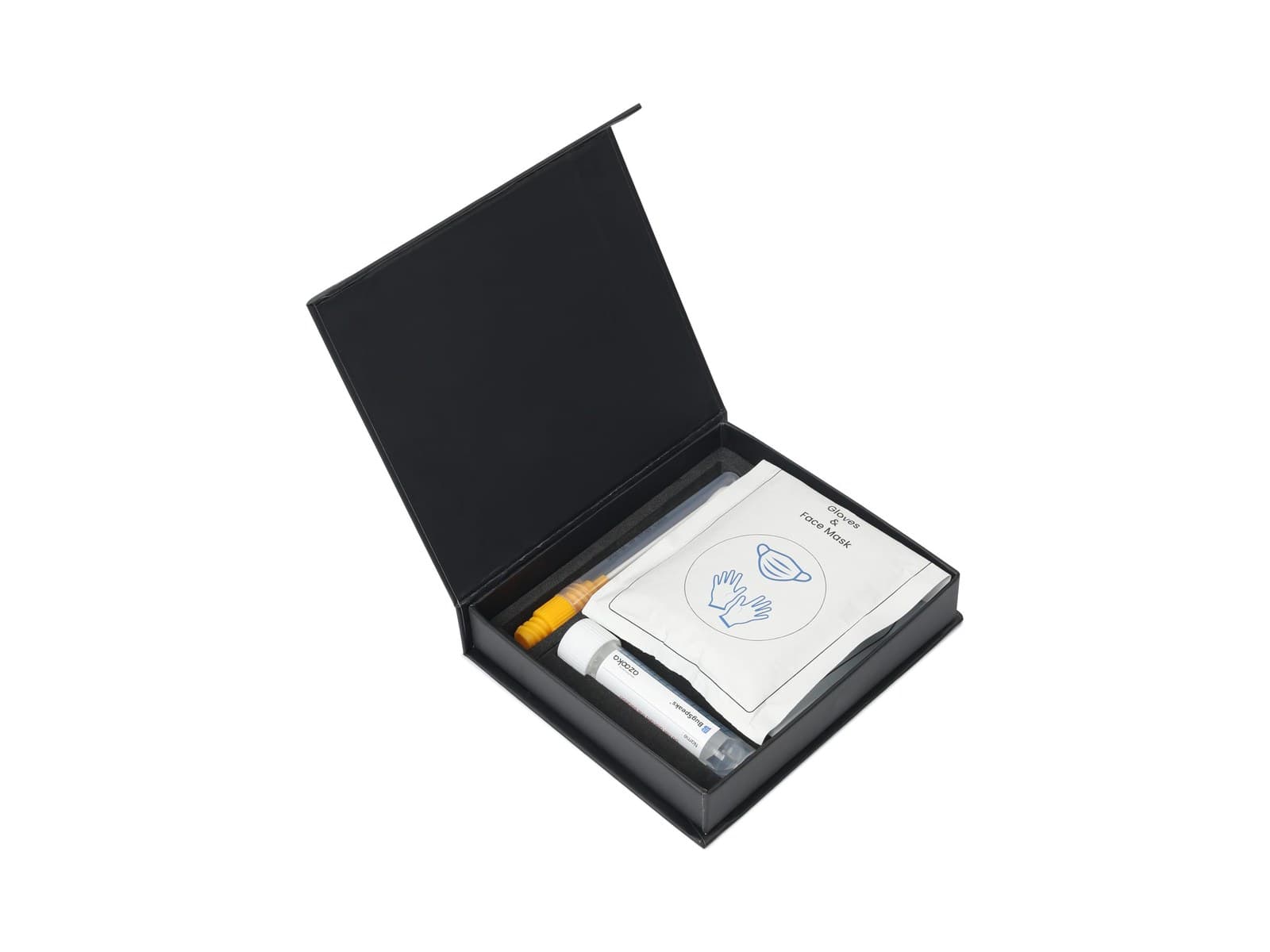
The kit
A swab, a tube with a solution that preserves the DNA, gloves and instructions. The sample takes a minute and you send it back free of charge with Econt. The report and the handbook are in your account within 16 working days of receiving it.
The report and the handbook do not diagnose anything and do not replace an examination by a gynaecologist. If you have unusual discharge, odour, itching, burning, pelvic pain or bleeding, see a doctor whatever your result says.
The process
Four steps from your order to the report and the handbook.
You order online. A courier delivers the kit discreetly to your door — within 2 working days, usually the next day.

Yourself, at home, with the swab in the kit. Ideally 7–12 days after the first day of your period, after at least 2–3 days without bleeding.

Free return shipping. Your sample travels to the Leucine Rich Bio laboratory for shotgun sequencing.

The 34 traits, the check across 26 antibiotics and your personal recommendations appear in your account within 16 working days of receiving your sample.
Science and trust
A swab examined under the microscope and cultured looks for the cause of a specific complaint and can give a susceptibility test. PCR tests look for a preselected list of microbes. Shotgun metagenomic analysis reads the DNA of every microbe in the swab, including yeast down to species, and uses it to score 34 traits and check for resistance genes to 26 antibiotics. The handbook cites the scientific sources for every trait. The test does not replace a standard antibiogram, does not diagnose anything and does not replace a visit to your gynaecologist.
Reviews
Published with the customers' permission. Results are individual — every microbiome is different.
Toma Tanev
„I slept badly. I never connected it with my plate."
I took the test for digestion — I had written off my sleep. The plan emphasised foods for the gut–brain axis, which sounded like marketing to me. By the second month I was waking up less at night. I am not claiming it was only this, but I changed nothing else.

Stoyan Grigorov
„I bloated every evening and had got used to it."
I had tried plenty at random — gluten-free once, dairy-free another time, always something. The report showed that the bacteria which break down fibre were exactly what I lacked, and the plan started there. For the first three or four weeks I felt nothing. Then the bloating eased enough that I stopped keeping track of it.
Aleksandar Zhelyazov
„I switched off in the afternoons and blamed my age."
Honestly, I did not expect much. The plan was a nuisance at first — I had to buy things I never used. Somewhere in the second month I noticed I no longer reached for coffee at four in the afternoon. I am not a different person, but the day ends more easily.
Maria Todorova
„I tried creams for years without thinking about my gut."
My skin flared up for no clear reason. The report linked it to the state of my gut, so the plan started there rather than with my face. Not everything went away, but the redness calmed down enough that I stopped reaching for concealer every morning.
Kemal Kemal
„I did not go on a diet. I just saw what I was feeding."
I was putting on two or three kilos a year, and every restriction lasted me about a month. The test showed I had been feeding the bacteria that like processed food. The plan did not forbid anything, it rearranged. In five months I lost six kilos — slowly, but for the first time without counting calories.
Toma Tanev
„I slept badly. I never connected it with my plate."
I took the test for digestion — I had written off my sleep. The plan emphasised foods for the gut–brain axis, which sounded like marketing to me. By the second month I was waking up less at night. I am not claiming it was only this, but I changed nothing else.
Stoyan Grigorov
„I bloated every evening and had got used to it."
I had tried plenty at random — gluten-free once, dairy-free another time, always something. The report showed that the bacteria which break down fibre were exactly what I lacked, and the plan started there. For the first three or four weeks I felt nothing. Then the bloating eased enough that I stopped keeping track of it.
Frequently asked questions
BugSpeaks is a wellness product. The results show the composition and functions of the microbiome; they are not a medical test and are not intended to diagnose, prevent or treat disease. If you have health concerns, see a doctor. Read the full medical disclaimer.
Two ways to begin. If your complaints are about digestion or energy, start with the gut. If they show on your skin — start there.