In most people the gut flora, that is the microbiome in the gut, recovers close to its previous state within a few weeks to two months after a course of antibiotics. In some, the changes are visible for months, and certain species are still missing six months later. This is because antibiotics affect not only the bacteria causing the infection but also many of the beneficial bacteria in your gut.
This article is about the time after the course: how long recovery takes, what it depends on, what to eat and when to see a doctor. Whether to take a probiotic during the course itself is a separate question to discuss with your doctor or pharmacist.
What do antibiotics do to gut bacteria?
They lower their diversity and, within days, change the balance between species. Some beneficial groups shrink, and other microbes multiply in their place.
In a 2018 study from Denmark, 12 healthy men took a combination of three last-resort antibiotics, usually given in hospital, for 4 days. First, their bifidobacteria and the bacteria that make butyrate (one of the short-chain fatty acids) fell. Enterobacteria and opportunistic microbes such as Enterococcus faecalis and Fusobacterium nucleatum multiplied.
In a 2022 American study, 20 healthy volunteers took one of four commonly prescribed antibiotics for 5 days: azithromycin, levofloxacin, cefpodoxime or azithromycin together with cefpodoxime. The day after the course, their samples contained fewer bacterial species, and the live bacteria the researchers grew in the lab had dropped by hundreds to tens of thousands of times, depending on the type. By day 19 from the start of the course, their numbers had come back.
A 2020 British review gathered 31 studies on the antibiotics GPs in the UK prescribe most often for respiratory and urinary tract infections. The studies agree that the change comes fast, but how strong it is depends on the drug. Clarithromycin reduced bifidobacteria and lactobacilli for up to 5 weeks. Amoxicillin affects the gut less, but in 6 of the 10 studies on it enterobacteria increased, and in one of them yeasts increased too.
How long does the microbiome take to recover after antibiotics?
For most people a few weeks to two months, but in some the changes are still visible six months later. The British review describes the same: in most people the bacteria return to their usual state within a few weeks, while some studies found changes 2–6 months after the course.
For amoxicillin, most of the studies in the review that followed people for longer describe a return within 2–4 weeks. Three of them, however, found changes from 6 weeks to 6 months after the last dose.
In the American study, the number of species returned within 2 months in most volunteers, but the make-up of the microbes, their resistance genes and the substances they produce stayed altered. After azithromycin, the return was slower. In the Danish study the bacteria came back close to their starting state in about a month and a half, but 9 species that every participant had before treatment were still missing in most of them after 6 months.
So there is no timeline that fits everyone. In the gut test report, diversity appears as the Shannon index, and the chart uses example values to show how a course of antibiotics might look there.
Diversity before and after a course of antibiotics
example values- Latest result
- 3.41
- 2 months after the course
- Optimal range
- 2.17–4.58
- from the sample report
- The values
- Examples
- the direction comes from the studies
Example values: the Shannon index is 3.62 before the course, 2.48 two weeks after it and 3.41 two months later. This is the direction the studies describe: a drop in the first weeks and, for most people, a return within about two months, though not always to the same level. Only the optimal range of 2.17–4.58 is real; it comes from the sample report and is based on reference groups of healthy people from different parts of the world.
Source: BugSpeaks sample report, Bulgarian edition (the optimal range). The values are examples.
The data as a table
| Shannon index | |
|---|---|
| before the course | 3.62 |
| 2 weeks after | 2.48 |
| 2 months after | 3.41 |
| Optimal range | 2.17–4.58 |
What determines how quickly you recover?
The antibiotic and the microbes you start the course with. How strong the change is depends on the drug: in the British review clarithromycin affected the gut more than amoxicillin, and in the American study azithromycin slowed the return more than levofloxacin and cefpodoxime.
The microbes you start with matter too. In the American study, the three of the 20 volunteers who already had less diverse gut bacteria before the course changed the most. By the end, their microbiome had come to resemble that of patients in intensive care. A 2024 review reaches a similar conclusion: how much the microbiome changes and how quickly it returns depends on how resilient it is in each person.
Some bacteria help the others come back. An international analysis of more than 500 samples from 117 people on three continents found 21 species linked to better recovery after antibiotics. Many of them can feed on substances from food and help other species settle again. In mice, two of these species, Bacteroides thetaiotaomicron and Bifidobacterium adolescentis, together sped up recovery: in the first days there were about 100 times more microbes in the gut, and diversity returned faster.
Do antibiotics leave longer-lasting traces?
Sometimes. Besides the species that stay missing for months, resistance genes increase in the gut. In the Danish study, bacteria carrying resistance genes against beta-lactam antibiotics, the group that includes penicillins and cephalosporins, were favoured during and after the course. In the American study, resistance genes increased after three of the four regimens.
Observational studies also link antibiotic use with more frequent development of obesity and type 2 diabetes. Placebo-controlled studies in people, however, do not show the same effect on weight and insulin sensitivity in everyone. According to the 2024 review, the response differs from person to person and depends on how resilient their microbiome is.
This is no reason to refuse an antibiotic when your doctor decides you need one. It is a reason to pay attention to what you eat after the course.
Do you need to finish the whole course of antibiotics?
Take the antibiotic for as many days and as many times a day as your doctor told you. Do not stop it on your own when you feel better, and do not extend it on your own.
You may have heard that unfinished courses are the main cause of antibiotic resistance. The evidence is not that clear-cut. A 2017 overview of 9 systematic reviews shows that for most common infections that do not need a hospital, a shorter course works as well as a longer one. These include strep throat and middle ear infections in children, sinusitis in adults and uncomplicated cystitis in women. On resistance, the authors write that the evidence is not enough to draw a conclusion.
So how many days the treatment should last is your doctor’s decision, based on the infection. If you feel better and wonder whether you can stop earlier, ask them. And do not take an antibiotic left over from a previous illness unless a doctor has prescribed it for you.
While most EU countries have managed to cut their antibiotic use, Bulgaria has shown the opposite trend. Since April 2024, antibiotics in Bulgaria are dispensed only with an electronic prescription. According to pharmacy sales data, sales fell by about 10% from 2022 to 2024, more than 1.1 million fewer packs, although over such a short period the drop is not yet statistically significant.
What should you eat after antibiotics?
A varied diet with more fermented foods and fibre. Most of the studies are in healthy people, but they show what happens to gut bacteria when you eat more of these foods.
In a 2021 Stanford University study, 36 healthy adults were split into two groups for 10 weeks. One group increased fermented foods such as yoghurt, kefir and sauerkraut, on average from 0.4 to 6.3 servings a day. In this group the diversity of gut bacteria rose steadily, and 19 of 93 inflammation-related proteins in the blood, including interleukin-6, went down. Interestingly, most of the new species in the gut did not come from the foods themselves.
The other group increased fibre from 21.5 to 45.1 g a day. Their diversity did not change over the 10 weeks, but the bacterial enzymes that break down fibre increased in their gut.
There is also data after antibiotics. In a 2026 analysis of nearly 2,000 people who had taken an antibiotic in the past month, those who ate fruit, vegetables and wholegrains more often had more bifidobacteria and bacteria of the genus Lachnospira. Bifidobacteria are among the first groups an antibiotic reduces. Their diversity, however, was not higher. This is an association, which does not yet show that fibre speeds up recovery.
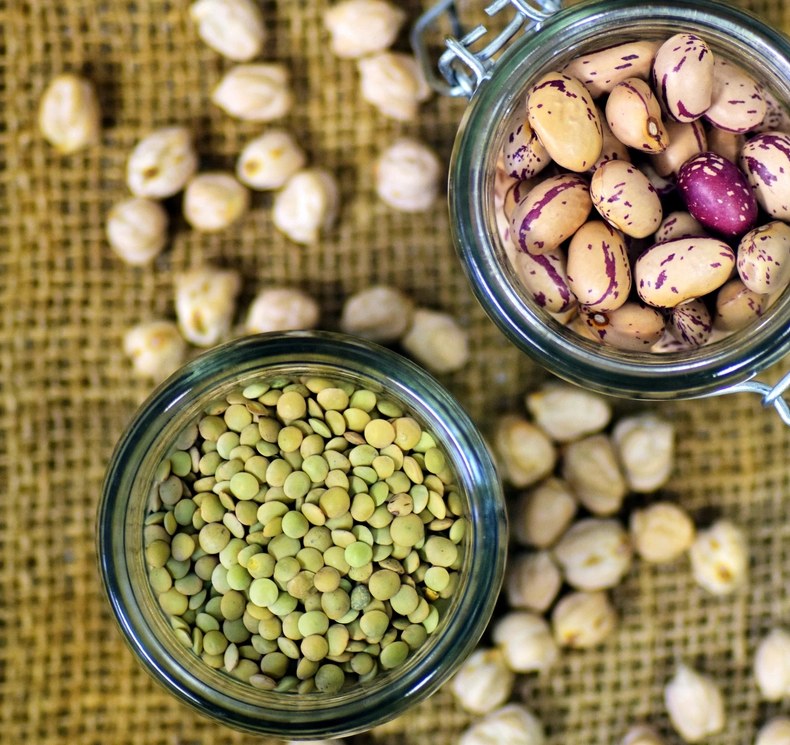
Fibre is found in vegetables, fruit, pulses and wholegrains, nuts and seeds, for example in onions, leeks, beans, lentils, chickpeas, oats and apples. If you have been eating little of them, increase them gradually. In the Stanford study, people took 4 weeks to reach their new diet. You will find more about fermented foods in our article on 10 probiotic foods.
Should you take a probiotic after antibiotics?
It is not clear whether it helps the microbiome recover. A 2024 systematic review gathered 7 studies in which people took a probiotic during or after antibiotics and compared them with people on a placebo or without a probiotic. In 4 of the studies the probiotic did not change diversity, in one it softened the drop and in another it made it worse. For individual groups of bacteria, the effect ranged from smaller changes to slower recovery, and in one study resistance genes increased with the probiotic.
The authors conclude that, for now, no one can say which probiotic helps the microbiome return to its state before the antibiotic. If you are considering a probiotic after the course, discuss it with your doctor or pharmacist.
A probiotic during the course is a separate topic with more research behind it. Your doctor or pharmacist can tell you whether one makes sense for you.
When is diarrhoea after antibiotics a reason to see a doctor?
When it is severe, bloody or comes with a fever, when it does not stop, or when it starts days or weeks after the course. In some people antibiotics cause diarrhoea during the course or soon after it. See a doctor if:
- the diarrhoea is severe or watery and you go to the toilet many times a day;
- there is blood in your stool;
- you have a high temperature or severe abdominal pain;
- you have signs of dehydration, such as strong thirst, passing very little urine or dizziness;
- the diarrhoea does not stop, gets worse or starts days or weeks after the end of the course.
The weeks after the course matter because of the bacterium Clostridioides difficile, which can cause diarrhoea after antibiotics. In a Dutch study of hospital patients, the risk of infection with it was 7–10 times higher during treatment and in the first month after it, and 2.7 times higher between the first and third month. So if you see a doctor, tell them you have recently taken an antibiotic.
The risk of C. difficile is highest up to a month after the course
Study in hospitals in the Netherlands (2006–2009): 337 patients with C. difficile infection and 337 without diarrhoea.
During the course and in the first month after it, the risk of C. difficile infection was 7–10 times higher, and between the first and third month 2.7 times higher, than in patients with no recent antibiotic.
Do not stop or change the antibiotic on your own because of diarrhoea. Talk to your doctor first.
What does the BugSpeaks gut test show after antibiotics?
The gut test report shows 13 things related to antibiotics and recovery afterwards, and the 12-week plan arranges your foods around them. On the first pages, in the summary scorecard, you see at a glance which indicators are low, optimal or above optimal. In detail, with the names used in the report:
- “Antibiotic Recovery Potential”: an estimate of how well your microbiome would recover after a course of antibiotics. According to the report, recovery depends, among other things, on a few bacterial species. In the international analysis of 117 people, researchers found 21 such species, and in mice two of them sped up the return of the other microbes.
- “Shannon Diversity”: how diverse your microbes are compared with reference groups of healthy people from different parts of the world, on a 3-zone scale. An antibiotic lowers diversity within the first days, and in the American study the people who changed most were those whose bacteria were already less diverse before the course.
- “Foundation Microbiota”: the share of 36 species on a 7-zone scale. They include Bacteroides thetaiotaomicron and Bifidobacterium adolescentis, the two species that sped up recovery in mice, as well as Bifidobacterium longum, Collinsella aerofaciens, Eubacterium eligens and Dorea longicatena, which recovered more slowly after azithromycin in the American study.
- “Short Chain Fatty Acid (SCFA) Production Potential”: your microbes’ potential to make butyrate and 8 other such acids from the fibre in your food, on a 3-zone scale. In the Danish study, the butyrate-producing bacteria were exactly the ones that fell early in the course.
- “Potential Gut Inflammation”, from the “Health Indicators” section: whether microbes linked to inflammation dominate your gut, on a 3-level scale. The indicator tracks the overgrowth of some microbes and the decline of beneficial ones, and after antibiotics both happen: in the Danish study, opportunistic microbes multiplied in the first days while beneficial groups fell.
- “Leaky Gut Potential”, from the same section: how strong your gut barrier is according to your microbes, that is, whether the ones that strengthen it or the ones that weaken it dominate. According to the report, butyrate is the main source of energy for the cells of the colon and supports the gut barrier, so the drop in the bacteria that make it shows here too.
- “Opportunistic microbes”: the share of 52 species compared with the reference groups, on a 7-zone scale. They include Enterococcus faecalis and Fusobacterium nucleatum, which multiplied early in the course in the Danish study, the enterobacteria Escherichia coli and Klebsiella pneumoniae, and Clostridioides difficile. This is information about the balance of your microbiome, not a test for infection: if you get diarrhoea after antibiotics, see a doctor without waiting for the test.
- “Kingdom Distribution”: what share of your microbes are bacteria, archaea, fungi, eukaryotes and viruses, on a 7-zone scale. After antibiotics the balance between them can shift: in one of the amoxicillin studies yeasts increased, and in another Candida was still there 6 weeks after the course.
- “Probiotic Characterization”: which of 42 probiotic species you carry and how much, on a 7-zone scale, including Bifidobacterium adolescentis, B. longum, Lacticaseibacillus rhamnosus and Saccharomyces boulardii. The species that are under-represented in your gut are listed on the first pages. Bifidobacteria are among the first groups an antibiotic reduces.
- “Probiotic Supplementation Summary”: for each of the 42 species, the report marks whether to consider a supplement, carry on as you are or avoid one. This matters because a probiotic after antibiotics does not always help: in the 2024 review, it did not change diversity in 4 of the studies and made the drop worse in one.
- “Antibiotic Resistance”: which known resistance genes against 90 antibiotics and antimicrobial substances your gut bacteria carry, with each marked “Sensitive” or “Resistant”. After a course these genes increase in the gut, as they did in both the Danish and the American study. This is general information about the microbiome. It is not an antibiogram, it does not show whether a treatment has worked or will work, and it is not a guide for choosing an antibiotic.
- “Rych Index”: an overall score from 0 to 100 that brings together diversity, your microbes’ potential to produce beneficial substances and the balance between beneficial and opportunistic microbes, which is exactly what antibiotics change. A repeat test shows how it moves.
- The report also has a section that compares your microbes with the microbial profiles seen in people with 8 conditions, including obesity and type 2 diabetes, and shows how similar they are, as a percentage. Observational studies link these two conditions with antibiotic use. This is not a diagnosis and does not predict whether you will develop any of them.
- “Nutrition Recommendations”: a 12-week plan in 3 phases (restart, rebuild and maintain) with about 250 foods in 11 groups, including the yoghurt, kefir, sauerkraut, beans, lentils and oats from this article. For each food and each phase you see how often to eat it: every day, every other day, once every 3 days or avoid as far as possible.
The nutrition plan runs in three phases
The first 2 weeks are a restart, the next 8 rebuild and the last 2 maintain. The plan covers about 250 foods in 11 groups, and 4 labels show how often you can eat each food.
Source: BugSpeaks gut test sample report, “Nutrition Recommendations” section
The plan also comes with an hour-by-hour menu for each phase, with 7 meals a day and three options for each. The authors of the 2024 review write that diet after antibiotics needs a personalised approach to work better. The plan in the report is built exactly that way, around your microbial profile, and the scales compare your values with reference groups of healthy people from different parts of the world.
If you want to see how your microbes change over time, there is also a bundle of two gut tests: you take the first now and the second about three months later.
We are also preparing the personalised probiotic. It is a fully individual probiotic formula with live bacterial cultures, created specifically for you based on the probiotic species missing from your gut test. It is a food supplement, not a medicine. If you have just finished a course of antibiotics, discuss with your doctor whether and when to start any supplement.
If the course was recent, the result will reflect it, so for a more representative picture some people wait a few weeks after it ends. This is information about your microbes and your diet, not an assessment of the treatment and not a diagnosis. If you have symptoms, show the report to a doctor.
This article is for educational purposes and does not replace advice from a doctor or pharmacist.
Sources (11)
- [1]Palleja A, Mikkelsen KH, Forslund SK et al., 2018. Recovery of gut microbiota of healthy adults following antibiotic exposure. Nature Microbiology.
- [2]Anthony WE, Wang B, Sukhum KV et al., 2022. Acute and persistent effects of commonly used antibiotics on the gut microbiome and resistome in healthy adults. Cell Reports.
- [3]Elvers KT, Wilson VJ, Hammond A et al., 2020. Antibiotic-induced changes in the human gut microbiota for the most commonly prescribed antibiotics in primary care in the UK: a systematic review. BMJ Open.
- [4]Chng KR, Ghosh TS, Tan YH et al., 2020. Metagenome-wide association analysis identifies microbial determinants of post-antibiotic ecological recovery in the gut. Nature Ecology & Evolution.
- [5]Vliex LMM, Penders J, Nauta A et al., 2024. The individual response to antibiotics and diet: insights into gut microbial resilience and host metabolism. Nature Reviews Endocrinology.
- [6]Dawson-Hahn EE, Mickan S, Onakpoya I et al., 2017. Short-course versus long-course oral antibiotic treatment for infections treated in outpatient settings: a review of systematic reviews. Family Practice.
- [7]Wastyk HC, Fragiadakis GK, Perelman D et al., 2021. Gut-microbiota-targeted diets modulate human immune status. Cell.
- [8]Tang Y, Fu X, Sun Y, 2026. Re-evaluating gut microbiome signatures of post-antibiotic dietary fiber intake in a large adult cohort. BMC Research Notes.
- [9]Łukasik J, Dierikx T, Johnston BC et al., 2024. Systematic review: effect of probiotics on antibiotic-induced microbiome disruption. Beneficial Microbes.
- [10]Hensgens MP, Goorhuis A, Dekkers OM, Kuijper EJ, 2012. Time interval of increased risk for Clostridium difficile infection after exposure to antibiotics. Journal of Antimicrobial Chemotherapy.
- [11]Vankova D, Veleva N, Boncheva P, Kondova K, 2025. Antibiotic Consumption at the Community Level: The Potential of a Single Health Policy Instrument to Assist Appropriate Use—Insights from Bulgaria. Antibiotics (Basel).