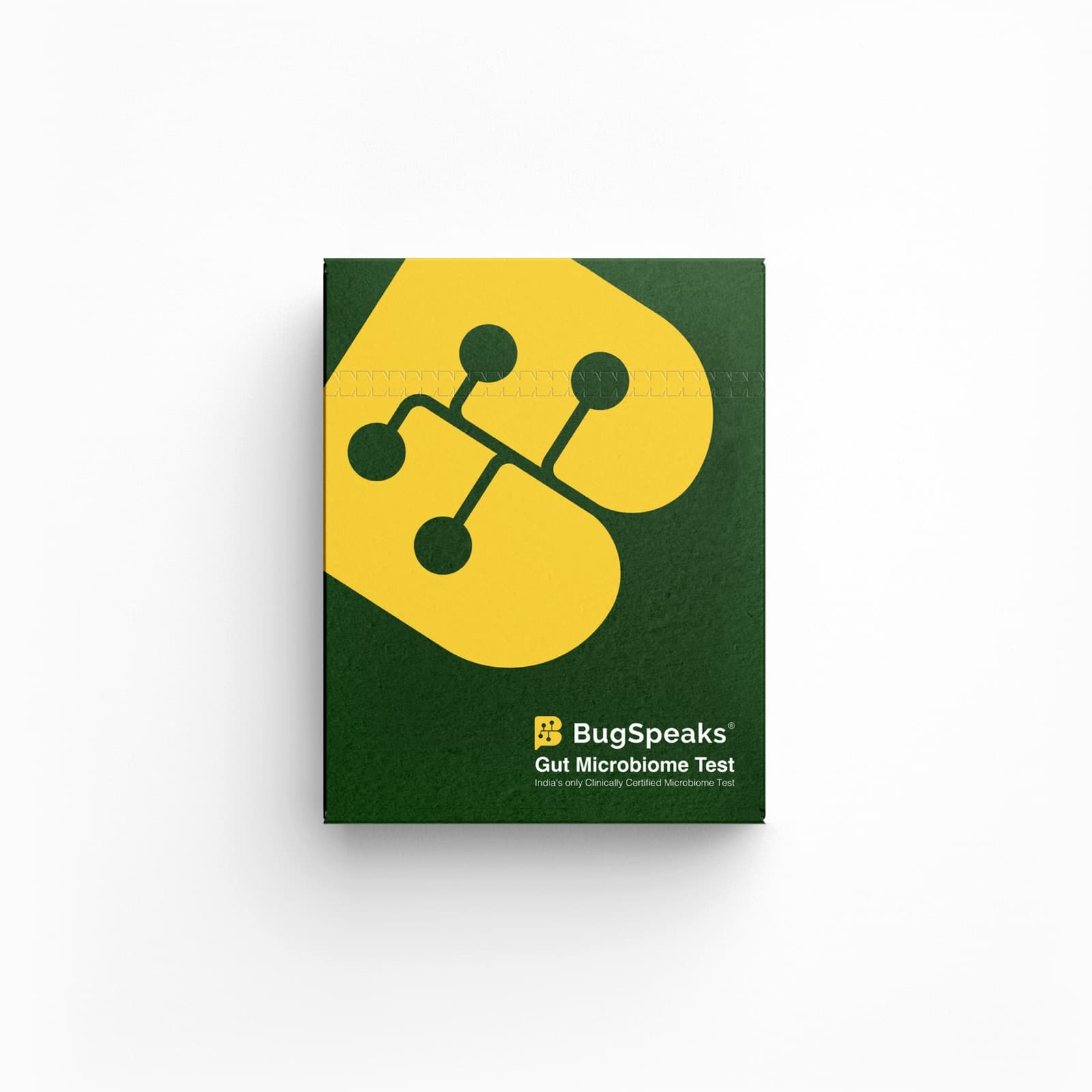
You order the test
You order online. A courier delivers the kit discreetly to your door — within 2 working days, usually the next day.
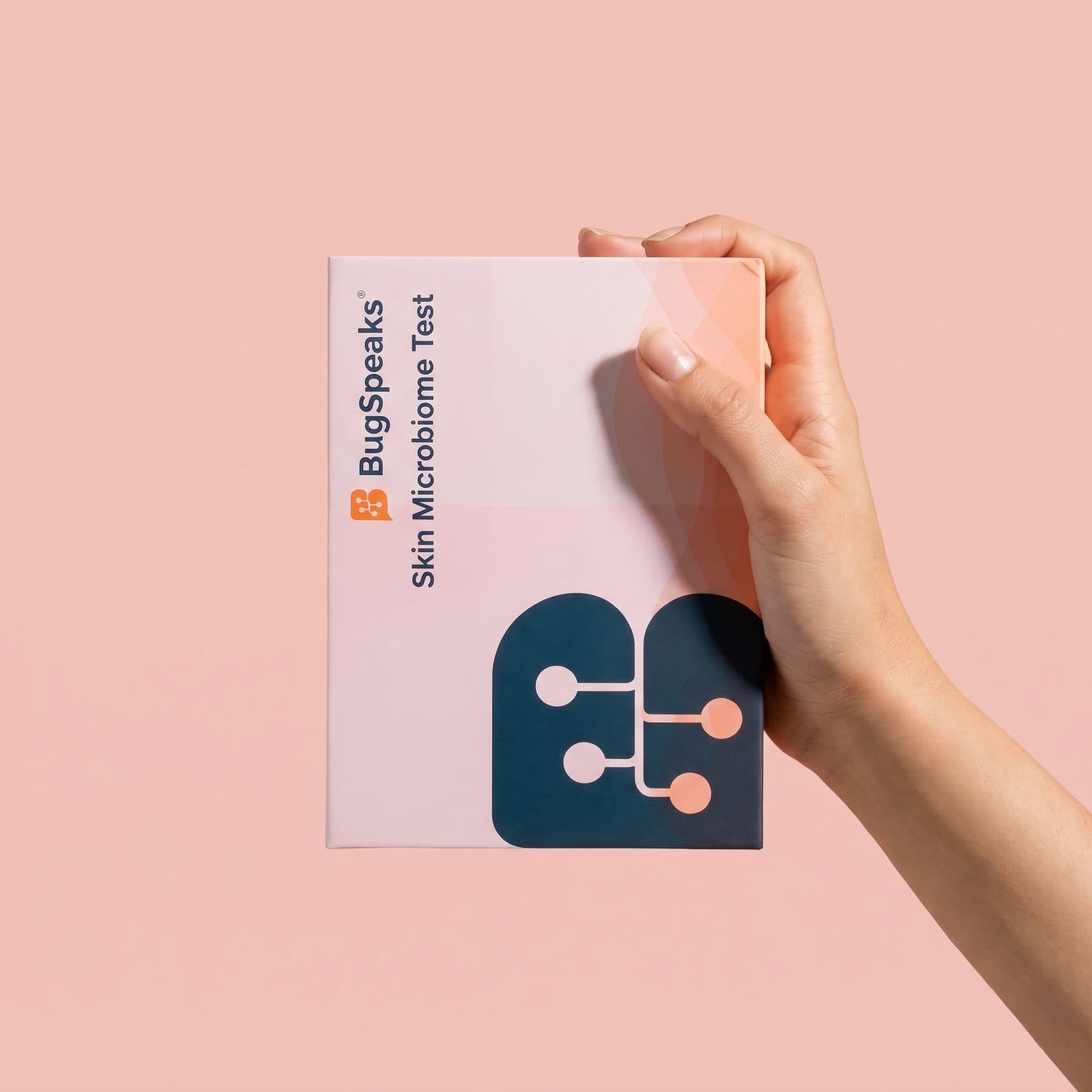
What lives on your skin — at molecular level.
Bacteria and fungi live on the skin of your face. They play a part in how much moisture your skin holds, how easily it gets irritated and how it copes with the sun. BugSpeaks reads their DNA and uses it to score 11 traits of your skin, combined into 5 summary scores. Then you get ingredients, probiotics and foods chosen for your result.
11 skin traits, calculated from its microbes
The report scores the potential of the microbes on your skin across 11 traits, from collagen and ceramide production to pH maintenance, each from 0 to 100. It then combines them into five summary scores: barrier, hydration, sensitivity, recovery and ageing.
Ingredients chosen for your result
Not a list “for your skin type”, but active ingredients, plant extracts and probiotic lysates selected from your scores. On top of that you get probiotics to take by mouth and a list of foods.
Which microbes live on your skin
How diverse the microbes on your skin are and what share of them are bacteria, fungi and the other kingdoms. You also see the share of 37 opportunistic species compared with healthy people. Information about balance, not a test for infection.
25 pages in plain language
Every trait is explained twice: once for you and once for your dermatologist or beautician. The report is in your account within 16 working days of receiving your sample.
You order
The courier delivers the kit within 2 working days — usually the next day, discreetly packed.
You take the sample at home
A few minutes, with no appointment needed. The exact steps are in the instructions in the box.
You send it back free
Free of charge, with Econt. The laboratory runs shotgun sequencing on the sample.
You get the report
Within 16 working days of receiving your sample — in your account, with the personalised recommendations.
 You save €100 by buying them together
Add to your order
The gut test in a bundle with the skin test
The skin report itself recommends a gut test for more precise and complete dietary guidance: the skin report gives a list of foods, while the gut report gives a detailed 12-week plan based on the microbes in your gut.
A one-off price, no subscription. The report also recommends a gut test for a broader picture.
You will see how well your microbes protect the barrier.
The “barrier strength” area shows how much the microbes on your skin help the lipids that hold moisture, the slightly acidic environment and the protection against outside irritants. It is built mainly on epidermal integrity, ceramides and pH maintenance, and less on moisture and sebum.
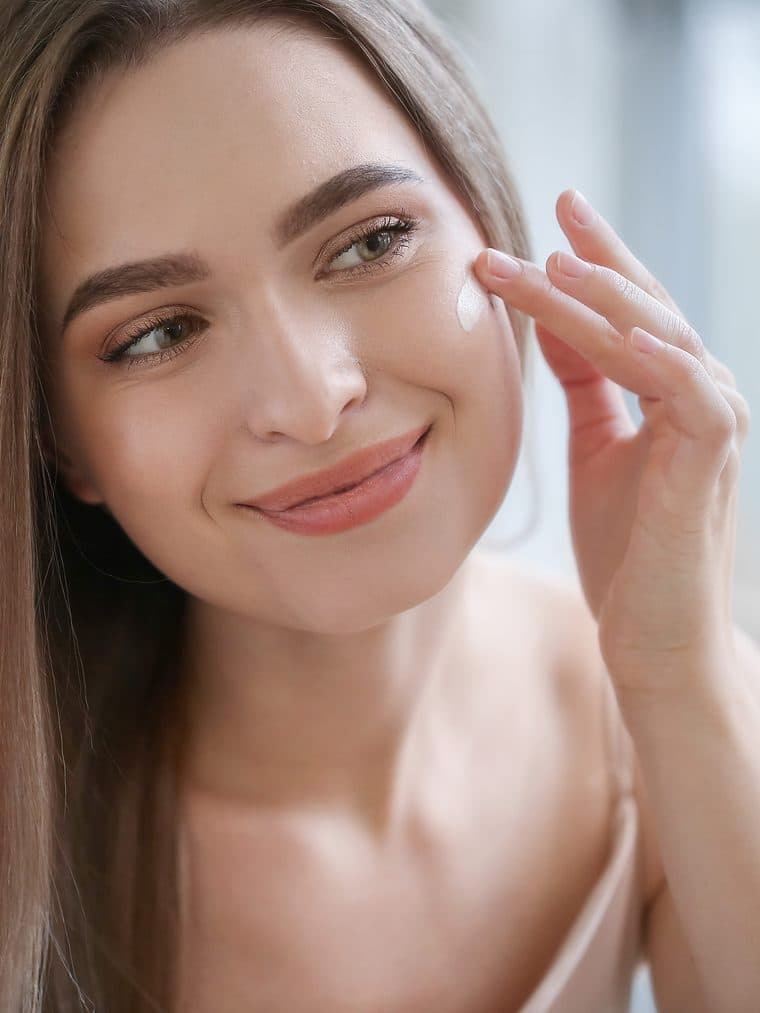
The report scores the potential of the microbes on your skin. It does not measure the skin itself and is not a diagnosis. Genetics, diet and lifestyle also play a part, but the test does not take them into account.
What you get
The report turns the DNA of the microbes on your face into 11 skin traits, combined into 5 summary scores, and goes down to the individual microbe species. Tap any card to learn more.
Creams work from the outside, while your microbes work on your skin every day. The pentagon shows in which of the five scores they help most and where your skin needs support, so you know where to start.
Collagen, ceramides, moisture and pH shape how your skin looks and feels. The report shows how much your microbes help with them and with seven more traits, so you can choose your skincare for your own skin.
How much your microbes support the making of collagen and protect what is there.
Collagen keeps skin firm. The score is about the microbes, not a measurement of the collagen in your skin.
How much your microbes help your skin cope with the sun.
Microbes make substances that help with UV light. They do not replace sunscreen.
How much your microbes neutralise the stress from pollution and sunlight.
The score is based on the microbes' protective pathways. It is not your body's antioxidant status.
How much your microbes keep the skin's slightly acidic environment.
This environment holds moisture and stops some irritants. The test does not measure pH.
How much your microbes help your skin hold on to water.
The score covers natural moisturising factors and evaporation, through the microbes' pathways. It is not a measurement of the moisture in your skin.
How much your microbes help a strong physical barrier.
The epidermis is the top layer of the skin. It holds water and keeps irritants out, and the score shows how much your microbes help it.
How much your microbes help preserve elastin.
Elastin lets skin spring back into shape. The report scores how the microbes affect its breakdown.
How well your microbes can make ceramides.
Ceramides hold moisture in the surface layer. The score is based on the microbes' genes, not yours.
Whether your microbes tend to calm your skin or keep it irritated and red.
Here lower is better. The score is about the microbes, not a skin condition.
How calmly your skin copes with everyday irritants and cosmetics.
Here lower is better: it means your skin takes to a new product without stinging or peeling. It is not an allergy test.
Whether your microbes reflect drier, balanced or oilier skin.
The middle is best. It does not determine your skin type and is not an assessment of acne.
Here are the microbes themselves: how diverse they are, what share each kingdom has and how much of the opportunistic species there is.
The Shannon index: how diverse the microbes on your skin are.
It is compared with healthy people and shows whether diversity is low, optimal or above optimal.
What share of the microbes on your skin are bacteria, archaea, fungi, eukaryotes and viruses.
You see the whole community on your skin, not just the bacteria. Each share is on a 7-step scale compared with healthy people.
The share of 37 species of bacteria and fungi that are usually scarce on healthy skin.
Each species is on a 7-step scale compared with healthy people. This is information about the balance of your microbes, not a test for infection and not a diagnosis.
The report does not stop at the numbers. Based on your scores it picks ingredients, probiotics and foods and gives you a simple routine. You do not need to use everything at once: pick one ingredient from each group and look for a serum, cream or sunscreen with it.
Ingredients for serums and creams, chosen from your scores, each with one sentence on why.
There are alternatives if you are allergic to one of them. For a serious skin problem the report advises seeing a dermatologist.
Extracts to look for in your cosmetics.
They are chosen from your result, so they differ from person to person.
Lysates of beneficial bacteria to apply to the skin.
The species in the lysates are chosen from the analysis of your skin.
Probiotic species chosen from the analysis of your skin.
This is information, not a prescription. If you have a condition or take medication, ask a doctor first.
A list of foods chosen for your skin.
For a detailed nutrition plan the report also recommends a gut test: it gives a 12-week plan based on the microbes in your gut.
A 4-step routine: cleansing, serum, moisturiser and sunscreen.
Plus which ingredients not to mix and tips on water, sleep and exercise. These guidelines are the same for everyone.
Sample report
25 pages just about your skin: the five summary scores, the 11 traits, the microbes on it and the ingredients chosen for you. The report is in your account within 16 working days of receiving your sample.
The process
Four steps from your order to recommendations for your skin.
You order online. A courier delivers the kit discreetly to your door — within 2 working days, usually the next day.
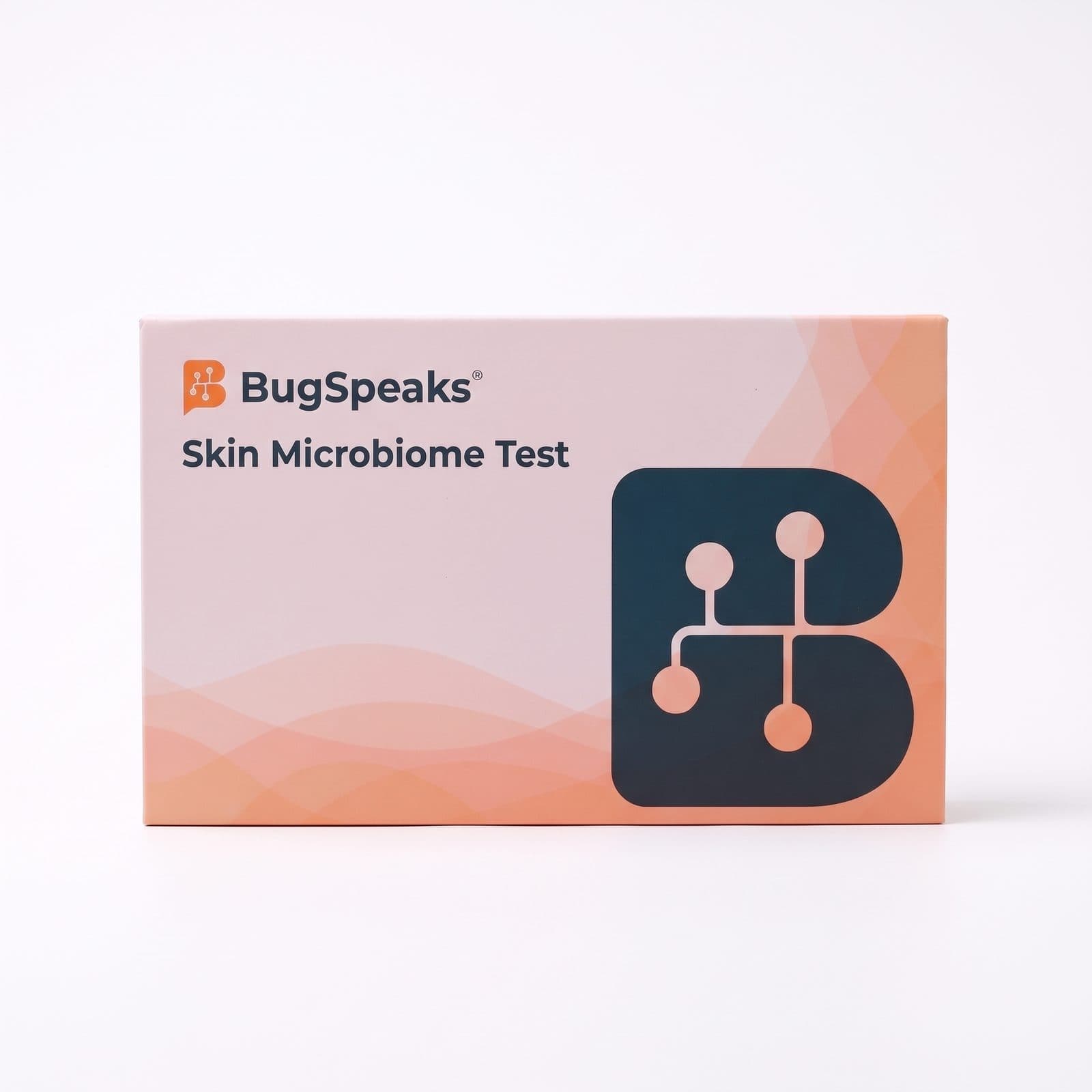
In the morning, before you wash your face, with the sterile swab in the kit. It takes about 2 minutes and does not hurt.
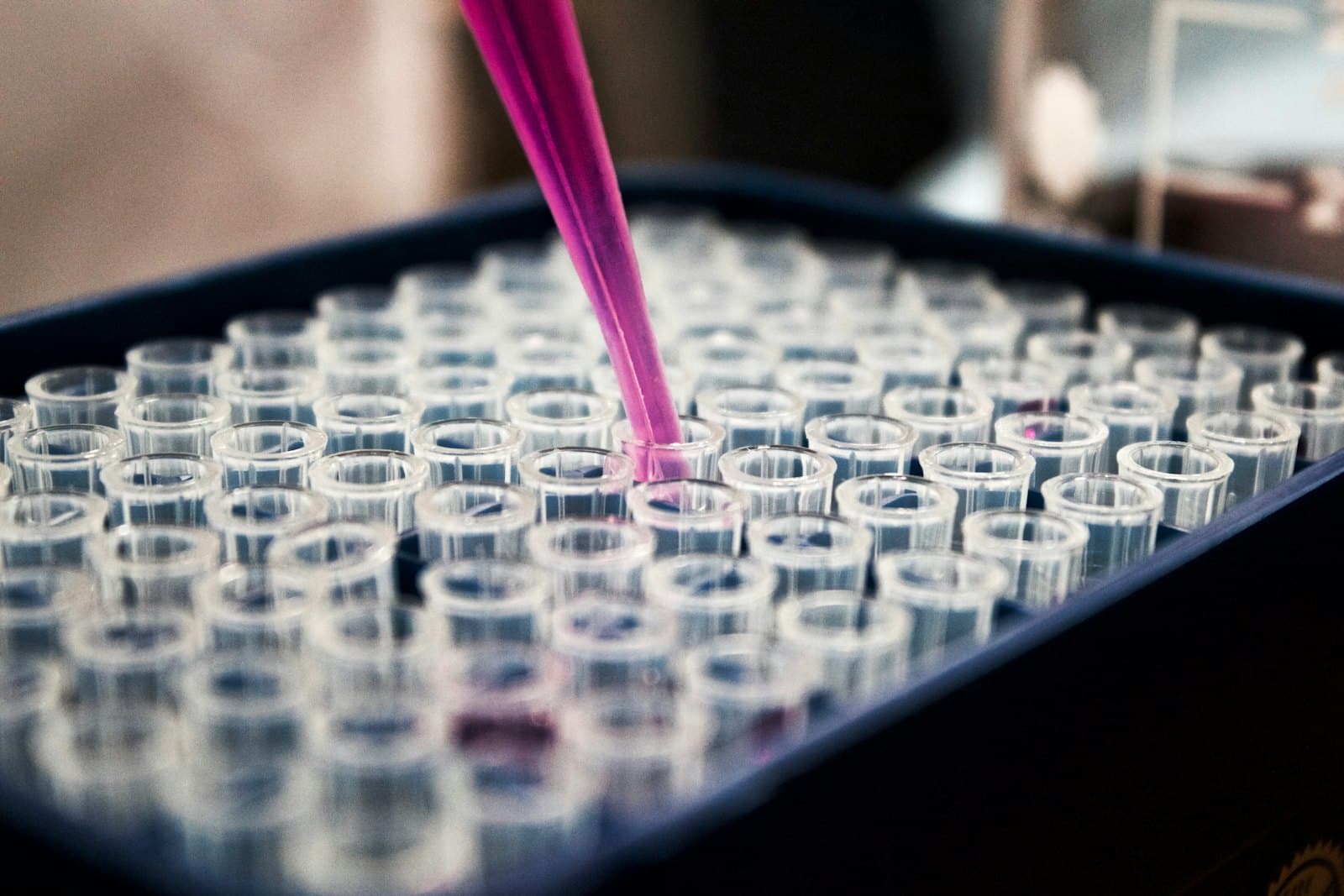
Free return shipping. Your sample travels to the Leucine Rich Bio laboratory for shotgun sequencing.
The 11 traits, the 5 summary scores, the microbes on your skin and your personal recommendations appear in your account within 16 working days of receiving your sample.
Science and trust
The skin test is the same shotgun metagenomic analysis as the gut test: the laboratory reads the DNA of all the microbes in the swab, not just one gene as 16S tests do. The scores are calculated from the microbes on your skin alone. Genetics, diet and lifestyle matter too, but the test does not take them into account. The report draws on 21 scientific references.
Reviews
Published with the customers' permission. Results are individual — every microbiome is different.
Toma Tanev
„I slept badly. I never connected it with my plate."
I took the test for digestion — I had written off my sleep. The plan emphasised foods for the gut–brain axis, which sounded like marketing to me. By the second month I was waking up less at night. I am not claiming it was only this, but I changed nothing else.
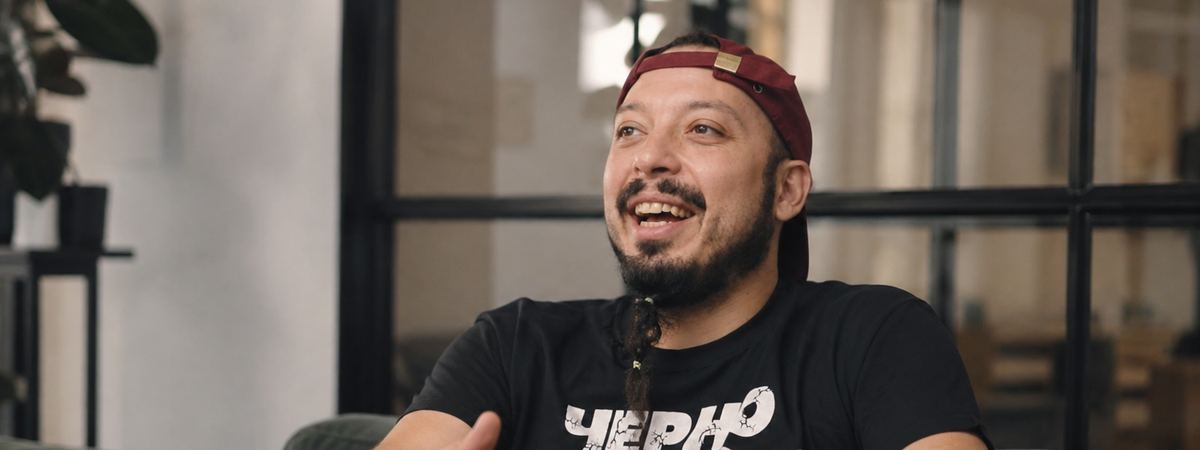
Stoyan Grigorov
„I bloated every evening and had got used to it."
I had tried plenty at random — gluten-free once, dairy-free another time, always something. The report showed that the bacteria which break down fibre were exactly what I lacked, and the plan started there. For the first three or four weeks I felt nothing. Then the bloating eased enough that I stopped keeping track of it.
Aleksandar Zhelyazov
„I switched off in the afternoons and blamed my age."
Honestly, I did not expect much. The plan was a nuisance at first — I had to buy things I never used. Somewhere in the second month I noticed I no longer reached for coffee at four in the afternoon. I am not a different person, but the day ends more easily.
Maria Todorova
„I tried creams for years without thinking about my gut."
My skin flared up for no clear reason. The report linked it to the state of my gut, so the plan started there rather than with my face. Not everything went away, but the redness calmed down enough that I stopped reaching for concealer every morning.
Kemal Kemal
„I did not go on a diet. I just saw what I was feeding."
I was putting on two or three kilos a year, and every restriction lasted me about a month. The test showed I had been feeding the bacteria that like processed food. The plan did not forbid anything, it rearranged. In five months I lost six kilos — slowly, but for the first time without counting calories.
Toma Tanev
„I slept badly. I never connected it with my plate."
I took the test for digestion — I had written off my sleep. The plan emphasised foods for the gut–brain axis, which sounded like marketing to me. By the second month I was waking up less at night. I am not claiming it was only this, but I changed nothing else.
Stoyan Grigorov
„I bloated every evening and had got used to it."
I had tried plenty at random — gluten-free once, dairy-free another time, always something. The report showed that the bacteria which break down fibre were exactly what I lacked, and the plan started there. For the first three or four weeks I felt nothing. Then the bloating eased enough that I stopped keeping track of it.
Frequently asked questions
More articles
BugSpeaks is a wellness product. The results show the composition and functions of the microbiome; they are not a medical test and are not intended to diagnose, prevent or treat disease. If you have health concerns, see a doctor. Read the full medical disclaimer.
Two ways to begin. If your complaints are about digestion or energy, start with the gut. If they show on your skin — start there.