The gut and the skin influence each other through inflammation, the immune system and the substances microbes make. Scientists find changes in gut microbes in acne, rosacea, eczema and psoriasis, but for now these are associations, not established causes. That is why caring for your skin from the outside and eating well complement each other.
How does the gut affect the skin?
Through several routes, which a 2025 review groups under the name “gut–skin axis”:
- The gut barrier. When the balance of microbes is disturbed, the gut wall can become more permeable. Substances from bacteria and food then pass into the blood and fuel inflammation throughout the body.
- The immune system. The gut is the largest immune organ in the body, and an imbalance of microbes there can amplify inflammatory responses.
- Substances made by microbes. When fewer short-chain fatty acids such as butyrate are made in the gut, inflammation can increase. In mice, fibre and butyrate protected the skin barrier in a model of atopic dermatitis.
The link also works the other way. In studies, exposing the skin to ultraviolet B light had a beneficial effect on the gut microbiome. That is no reason to stay in the sun without protection, but it shows how closely the two organs are connected.
Which microbes live on the skin?
It depends on the spot. The skin is about 1.8 square metres of oily, moist and dry “habitats”. On the face, chest and back, where there are many oil glands, fat-loving microbes grow, such as Cutibacterium bacteria (formerly Propionibacterium) and Malassezia fungi. In one study, Malassezia made up 53 to 80% of the fungi on the skin, depending on the site.
The skin surface is acidic, with a pH of about 5. Fatty acids that bacteria release from sebum help keep it that way, and this acidity holds back Staphylococcus aureus and Streptococcus pyogenes. When skin stays covered for long and its pH rises, these bacteria grow more easily.
The top layer of the skin is like a wall of bricks and mortar: dead cells held together by fats, mainly ceramides. Microbes help here too. Staphylococcus epidermidis, one of the most common bacteria on healthy skin, releases an enzyme that helps the skin make more ceramides. In mice it increased ceramides and reduced water loss from damaged skin.
Is there a link between the gut and acne?
There is evidence of a link, but not of a cause. In a small 2026 pilot study of 17 people with moderate to severe acne and 14 healthy people, gut bacterial diversity was lower in those with acne. The changes in the gut were more marked than the changes on the skin.
The evidence on food is clearer. A 2022 systematic review of 34 studies concluded that foods with a high glycaemic index and a lot of carbohydrate worsen acne slightly but significantly, which randomised trials also support. For dairy the evidence is mixed: in some people, mainly those on a Western diet, more milk may worsen acne.
Is rosacea linked to the gut?
Yes, and here the link is clearer. Small intestinal bacterial overgrowth (SIBO) is found more often in rosacea. In a summary of 6 studies with 801 people, it was found in about 36% of people with rosacea and about 9% of people without it. According to the pooled analysis, SIBO is about 3.5 times as common in rosacea.
Small intestinal bacterial overgrowth is more common in rosacea
A summary of 6 studies with 801 people: 581 with rosacea and 220 without. The studies are small and differ from one another.
Small intestinal bacterial overgrowth (SIBO) was found in about 36% of people with rosacea and about 9% of people without rosacea.
Source: Khurmatullina et al., meta-analysis, 2025 (PMID 40778919)
In some of the studies, treating SIBO with the antibiotic rifaximin improved rosacea or cleared it in about 58% of those treated. Testing and treatment for SIBO are a matter for your doctor.
What does the gut have to do with eczema and psoriasis?
In both, scientists find changes in gut microbes, and eczema (atopic dermatitis) is the best studied. A 2026 systematic review of 62 studies found lower gut microbial diversity in eczema, mainly in children, and less Faecalibacterium prausnitzii, bifidobacteria and Akkermansia muciniphila. In psoriasis, not only the make-up of gut microbes changes but also the substances they produce.
During an eczema flare, the microbes on the skin change too. In a study of children with atopic dermatitis, staphylococci in the creases of the elbows and knees made up about 35% of the bacteria before a flare, about 90% during a flare without recent treatment and about 20% after treatment. During flares, about 65% of all bacteria there were Staphylococcus aureus.
During an eczema flare, staphylococci reach 90% of skin bacteria
In children with atopic dermatitis, staphylococci made up about 35% of the bacteria in the creases of the elbows and knees before a flare, about 90% during a flare without recent treatment and about 20% after treatment. In healthy children they made up about 16%.
Source: Kong et al., Genome Research, 2012 (PMID 22310478)
The data as a table
| Moment | Share of staphylococci |
|---|---|
| before | 35% |
| flare | 90% |
| after treatment | 20% |
Treatment increased the diversity of skin bacteria even before the skin visibly improved. In healthy children, staphylococci made up about 16%.
Can diet help the skin?
It can help, but it does not replace treatment. Here is what the studies say:
- Less sugar and white flour products: foods with a high glycaemic index slightly worsen acne.
- More fermented foods: in a Stanford study, 10 weeks of yoghurt, kefir, sauerkraut and other fermented foods increased the diversity of gut bacteria and lowered markers of inflammation.
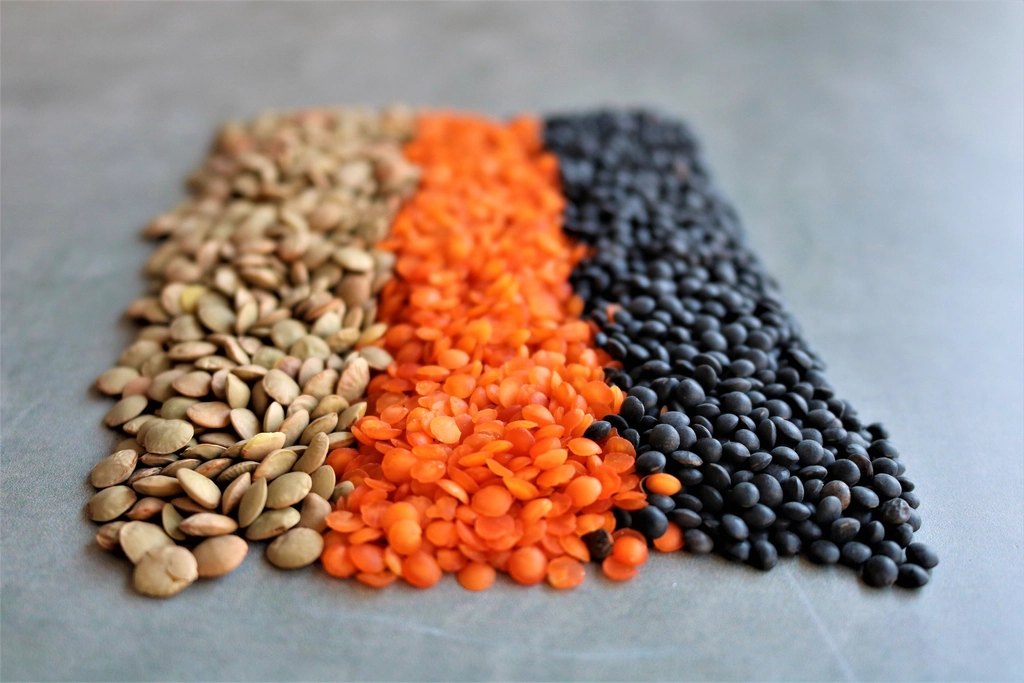
- More fibre from legumes, wholegrains, vegetables and fruit: in a summary of 64 studies, fibre increased bifidobacteria and lactobacilli in the gut and the amount of butyrate in stool.
- Be careful with dairy if you notice your acne gets worse after it.
For skin conditions, creams, medicines and procedures prescribed by a dermatologist remain the foundation. Diet and care for your microbes are the other half. How the gut also affects mood is covered in our article on the gut–brain axis, and which foods bring beneficial bacteria in our article on 10 probiotic foods.
What does the BugSpeaks skin test show about the gut–skin link?
It shows how much the microbes on your face help your skin across 11 skin traits and 5 summary scores, which microbes live there, and what to put on your skin and eat based on your result. Here are the parts related to this article, as they appear in the skin test report:
- “Irritation tendency” and “Reactivity and tolerance”: two of the 11 skin traits, each scored from 0 to 100, and for both lower is better. The first shows whether the microbes on your skin tend to calm it or keep it irritated and red, the second how calmly your skin copes with everyday irritants and cosmetics. Inflammation is one of the main routes of the gut–skin axis.
- “Sensitivity”: one of the 5 summary scores, which brings the two traits above together. Here higher means calmer skin.
- “Ceramide production”, “Epidermal integrity”, “pH maintenance” and “Moisture retention”: how much the microbes on your skin help ceramides form, keep the top layer dense, keep the surface acidic and hold on to water. Ceramides are the “mortar” of the skin barrier, and the acidic surface holds back Staphylococcus aureus. These traits make up the summary scores “Barrier strength” and “Hydration”.
- “Sebum regulation”: whether the microbes on your skin reflect a drier environment, a balanced one or one rich in oils. Here the middle is best. Sebum feeds some of the skin’s microbes, and the fatty acids from it keep the surface acidic.
- The other four skin traits: “Collagen production”, “Elasticity maintenance”, “Antioxidant defence” and “Photoprotection and resilience”. The report builds the summary scores “Repair and recovery” and “Ageing and preservation” mainly from these.
Your skin in five summary scores
sample resultSample result: the five summary scores of the skin report on one diagram. For all five, higher is better. The report does not explain their numerical scale, so the shape has no numbers.
Source: BugSpeaks sample skin report, p. 2 (sample values)
The report also goes down to the microbes on your skin and the ingredients chosen for you:
- “Shannon Diversity” and “Kingdom Distribution”: how diverse the microbes on your skin are compared with a healthy population, and what share of them are bacteria, archaea, fungi, eukaryotes and viruses. During an eczema flare the diversity of skin bacteria drops, and treatment restores it.
- “Opportunistic microbes”: the share of 37 species, 15 bacteria and 22 fungi, compared with a healthy population, including Staphylococcus aureus. During an eczema flare it makes up about 65% of the bacteria in the skin creases. This is information about the balance of your microbes, not a test for infection.
- “Primary Topical Ingredients”, “Natural Topical Extracts” and “Topical Probiotic Lysates”: ingredients for care from the outside, chosen from your results, plus a simple 4-step routine: cleanse, serum, moisturiser and sunscreen.
- “Oral Probiotic Recommendations” and “Dietary Recommendations”: probiotic species and foods chosen from the analysis of your skin microbiome. The report gives them because of the link between the gut and the skin, and in the same place recommends a gut test for more precise dietary guidance.
The other half of the axis is shown by the gut test. Its report shows the things the research in this article links to the skin:
- “Shannon Diversity”: the diversity of your gut microbes compared with reference groups of healthy people from different parts of the world, on a 3-zone scale. Lower gut diversity is described in both acne and eczema.
- “Foundation Microbiota” and “Probiotic Characterization”: the share of Faecalibacterium prausnitzii, bifidobacteria and Akkermansia muciniphila, the three microbes that are more often lower in eczema.
- “Short Chain Fatty Acid (SCFA) Production Potential”: your microbes’ potential to produce butyrate and 8 other such acids. Fewer short-chain fatty acids can increase inflammation, and in mice butyrate protected the skin barrier.
- “Potential Gut Inflammation” and “Leaky Gut Potential” in the “Health Indicators” section: whether microbes linked to inflammation dominate your gut and how strong your gut barrier is according to your microbes. A leaky gut wall and inflammation are among the main routes of the gut–skin axis.
- “Nutrition Recommendations”: a 12-week plan in 3 phases with about 250 foods in 11 groups, including the legumes, wholegrains and fermented foods from this article, each labelled with how often to eat it.
This is information about your microbes, not a diagnosis or an assessment of a skin condition. If you have acne, rosacea, eczema or psoriasis, show the report to a dermatologist.
In short:
- The gut and the skin influence each other through the gut barrier, the immune system and microbial substances such as butyrate.
- In rosacea, small intestinal bacterial overgrowth is found in about 36% of people, against 9% of people without rosacea.
- In eczema the gut more often has less Faecalibacterium prausnitzii, bifidobacteria and Akkermansia, and during flares staphylococci reach up to 90% of the bacteria on the skin.
- Foods with a high glycaemic index slightly worsen acne, while fermented foods and fibre support gut bacteria.
- The BugSpeaks skin test shows 11 skin traits and 5 summary scores, the microbes on your skin and personal recommendations, and the gut test shows the other half of the axis.
This article is for educational purposes and does not replace advice from a doctor.
Sources (10)
- [1]Jimenez-Sanchez M, Celiberto LS, Yang H et al., 2025. The gut-skin axis: a bi-directional, microbiota-driven relationship with therapeutic potential. Gut Microbes.
- [2]Grice EA, Segre JA, 2011. The skin microbiome. Nature Reviews Microbiology.
- [3]Zheng Y, Hunt RL, Villaruz AE et al., 2022. Commensal Staphylococcus epidermidis contributes to skin barrier homeostasis by generating protective ceramides. Cell Host & Microbe.
- [4]Lesiak A, Krawczyk A, Piasta J et al., 2026. Gut and skin dysbiosis in acne vulgaris: a comparative microbiome analysis. Frontiers in Cellular and Infection Microbiology.
- [5]Meixiong J, Ricco C, Vasavda C et al., 2022. Diet and acne: A systematic review. JAAD International.
- [6]Khurmatullina AR, Kucheryavyy YA, Andreev DN et al., 2025. Prevalence and risk of small intestinal bacterial overgrowth in patients with rosacea: a systematic review and meta-analysis. Terapevticheskii Arkhiv.
- [7]Malgesini A, Marsiglia MD, Borghi E et al., 2026. The Emerging Role of Gut Microbiota in Inflammatory Skin Diseases: A Systematic Review. Experimental Dermatology.
- [8]Kong HH, Oh J, Deming C et al., 2012. Temporal shifts in the skin microbiome associated with disease flares and treatment in children with atopic dermatitis. Genome Research.
- [9]Wastyk HC, Fragiadakis GK, Perelman D et al., 2021. Gut-microbiota-targeted diets modulate human immune status. Cell.
- [10]So D, Whelan K, Rossi M et al., 2018. Dietary fiber intervention on gut microbiota composition in healthy adults: a systematic review and meta-analysis. American Journal of Clinical Nutrition.