The gut–brain axis is the two-way link between the gut and the brain: through the vagus nerve, through substances made in the gut and through the immune system. Gut bacteria take part in all of these routes. In animals they can change behaviour, while in people scientists see clear links but do not yet know which is cause and which is effect.
How do the gut and the brain “talk”?
Over several routes that overlap:
- The vagus nerve. This is the most direct route, and 80 to 90% of its fibres carry signals upwards, from the organs to the brain.
- The gut’s own nervous system. Its wall holds a network with more neurons than the spinal cord, and it uses more than 30 neurotransmitters.
- The immune system. The gut is a major centre of immunity, and inflammatory signals from it can reach the brain.
- Substances made by microbes. These include short-chain fatty acids such as butyrate, and products of tryptophan metabolism, the amino acid the body uses to make serotonin.
Most vagus nerve fibres lead to the brain
Between 80 and 90% of the fibres of the vagus nerve carry signals from the organs, the gut among them, to the brain. The other 10–20% carry commands from the brain to the organs. The ring is drawn at the middle of the ranges: 85 to 15.
Signals also travel the other way. The brain influences how the gut moves, the immune cells in it and how permeable the gut wall is, which is why stress is so often felt in the stomach. You can read more in our article on how stress affects the microbiome.
Is it true that serotonin is made in the gut?
Yes, more than 90% of the body’s serotonin is made in the gut, in specialised cells of the gut lining. There it controls how the gut moves and secretes fluids, and through the blood it reaches the platelets. It does not, however, cross into the brain. Serotonin in the gut and serotonin in the brain are two separate pools.
Gut bacteria influence this production. In mice raised without microbes, serotonin in the colon is about 64% lower and in the blood about 49% lower. Some spore-forming bacteria prompt the cells of the gut lining to make more serotonin.
So for the link with the brain, scientists look at another route: tryptophan, from which the body makes serotonin and other substances. Gut bacteria strongly influence how tryptophan is processed, so it may be an important crossing point between the gut and the brain.
Do gut bacteria affect mood?
In animals they do; in people it is not yet clear. Experiments in mice show that microbes can change behaviour:
- mice raised without microbes respond to stress with more stress hormones;
- microbes from people with depression, transferred into mice with no microbes of their own, cause depression-like behaviour;
- Lactobacillus rhamnosus reduces anxious and depression-like behaviour in mice, and Bifidobacterium longum reduces anxious behaviour. With both bacteria the effect disappears if the vagus nerve is cut.
In people, scientists compare the microbes of patients and healthy controls. A 2021 summary of 59 studies found a shared pattern across depression, anxiety, bipolar disorder and schizophrenia: less Faecalibacterium and Coprococcus, which make anti-inflammatory butyrate, and more Eggerthella, a bacterium linked to inflammation. Diversity measured with the Shannon index, however, did not differ.
These are associations, not an established cause. Depression changes sleep, eating and movement, and they in turn change the microbes. That is why, in people, it is still not known which is cause and which is effect.
How certain is this science?
It is still young, but growing fast. For 2014, PubMed lists 176 articles on the gut–brain link, and for 2025 it lists 3,047, more than 17 times as many. Much of the data, however, still comes from animal experiments, and studies in people are smaller and shorter.
Scientists are writing more and more about the gut–brain axis
For 2014, PubMed lists 176 articles that mention the gut–brain link in the title or abstract. For 2025 it lists 3,047, more than 17 times as many. By 8 October 2026 there were 3,295, and if the pace holds the year will end with about 4,300.
Source: PubMed, number of articles by year of publication (checked on 9 October 2026)
The data as a table
| Year | Articles per year |
|---|---|
| 2014 | 176 |
| 2015 | 198 |
| 2016 | 275 |
| 2017 | 347 |
| 2018 | 457 |
| 2019 | 636 |
| 2020 | 893 |
| 2021 | 1218 |
| 2022 | 1493 |
| 2023 | 1717 |
| 2024 | 1985 |
| 2025 | 3047 |
| 2026 (estimate for 2026) | ~4,300 |
Why does irritable bowel syndrome so often come with anxiety?
Because the gut and the brain influence each other in both directions, and in irritable bowel syndrome (IBS) this link is especially visible. A summary of 73 studies found symptoms of anxiety in 39% of people with IBS and symptoms of depression in 29%. The odds of having them are about 3 times higher than in healthy people.
The link works the other way too: by one estimate, nearly 60% of people with anxiety or depression also have gut symptoms. That is why psychological approaches are also being tested in IBS. In studies, gut-directed hypnotherapy has helped people with IBS. If bloating bothers you, see also what helps with bloating.
Can food affect mood?
It may help, at least according to one small but important study. In the Australian SMILES trial, 67 people with moderate to severe depression received, over 12 weeks, either 7 sessions with a dietitian or the same number of social support sessions. Most of them were already in treatment and continued it.
The diet in the trial was a version of the Mediterranean diet: more vegetables, fruit, wholegrains, legumes, nuts, fish and olive oil, and fewer sweets, fried foods, fast food and processed meat. After 12 weeks, remission, meaning the symptoms had subsided, was reached by 32% of people in the dietitian group and 8% of those in the social support group.
With a better diet, depression went into remission more often
A small trial: 67 people with moderate to severe depression, 12 weeks. Most continued their usual treatment.
After 12 weeks, remission was reached by 32% of people who improved their diet with a dietitian (10 of 31) and by 8% of people in the social support group (2 of 25).
Source: Jacka et al., SMILES randomised trial, 2017 (PMID 28137247)
The trial did not measure microbes, so we do not know whether the effect works through them. Its foods, though, are rich in fibre, and fibre is the main food of gut bacteria. For more ideas, see our article on 10 probiotic foods.
Do probiotics help with depression and anxiety?
Perhaps a little, and as an addition to treatment, not instead of it. The Canadian Network for Mood and Anxiety Treatments (CANMAT) reviewed 23 randomised trials and 8 meta-analyses. Probiotics slightly improve symptoms of depression, mainly when given alongside the main treatment, but newer, higher-quality trials give mixed results.
That is why the 2026 CANMAT recommendations say a probiotic may be cautiously considered as a third-line add-on. For prebiotics and faecal microbiota transplants the evidence is not enough for a recommendation.
For anxiety the picture is even less clear. A 2026 summary of 30 reviews found inconsistent results, and the quality of most reviews was moderate, low or critically low. If you are thinking about a probiotic, discuss it with your doctor, especially if you take medication.
What can you do?
- If your mood has been low most days or you have lost interest in things you enjoy, see a doctor or a psychologist. If you have thoughts of harming yourself, get help straight away by calling 112.
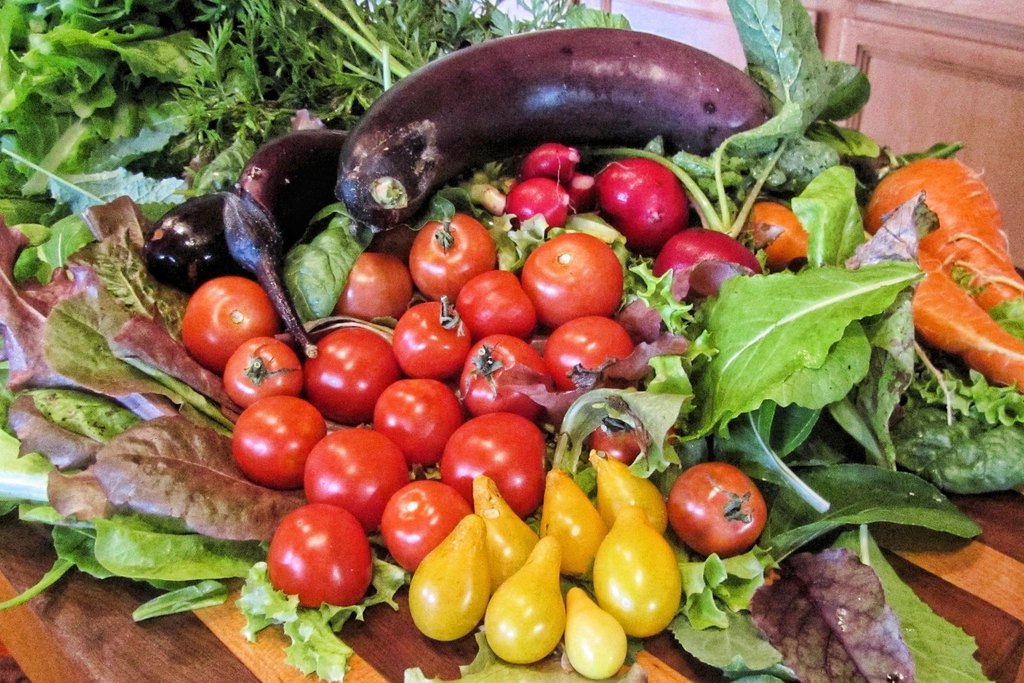
- Eat more vegetables, fruit, legumes, wholegrains, nuts and fish, as in the SMILES trial.
- Breathe slowly. Breathing influences the tone of the vagus nerve, and meditation and yoga probably help you cope better with stress.
- If you have both gut symptoms and anxiety, tell your doctor about both.
- If you want to see what your microbes can do, the gut test shows their potential for serotonin, GABA and butyrate.
What does the BugSpeaks gut test show about the gut–brain axis?
It shows 9 things related to the gut–brain axis: what your microbes can produce, which bacteria from this article you carry and whether microbes linked to inflammation dominate your gut. Here they are, as they appear in the gut test report:
- “Neurotransmitter Production Potential”: your microbes’ potential for 10 substances (acetylcholine, dopamine, adrenaline, GABA, glutamate, histamine, noradrenaline, serotonin, tryptamine and tryptophan), on a 3-zone scale. More than 90% of the body’s serotonin is made in the gut, and bacteria also influence tryptophan metabolism.
- “Short Chain Fatty Acid (SCFA) Production Potential”: your microbes’ potential to produce butyrate and 8 other such acids. They are among the substances through which microbes and the brain “talk”.
- “Foundation Microbiota”: the share of 36 species compared with reference groups of healthy people from different parts of the world, on a 7-zone scale. They include Faecalibacterium prausnitzii, Coprococcus catus and C. comes, and in the summary of 59 studies these genera were lower in depression and anxiety.
- “Probiotic Characterization”: which of 42 probiotic species you carry and how much, including Lacticaseibacillus rhamnosus (formerly Lactobacillus rhamnosus) and Bifidobacterium longum, the two bacteria that act through the vagus nerve in mice.
- “Probiotic Supplementation Summary”: for each of the 42 species, the report notes whether to consider a supplement, carry on as you are or avoid one. The CANMAT recommendations allow a probiotic as an add-on to depression treatment, so it helps to know which species you already have.
- “Potential Gut Inflammation” in the “Health Indicators” section: whether microbes linked to inflammation dominate your gut and whether the helpful ones that make short-chain fatty acids are plentiful enough. Inflammation is one of the routes between the gut and the brain.
- “Leaky Gut Potential”: how strong your gut barrier is according to your microbes, that is, whether the ones that strengthen it or the ones that weaken it dominate. The permeability of the gut wall is one of the gut functions the brain influences.
- The report also has a section that compares your microbes with the microbial profiles seen in people with irritable bowel syndrome and shows, as a percentage, how similar they are. This is not a diagnosis and does not predict whether you will develop irritable bowel syndrome.
- “Nutrition Recommendations”: a 12-week plan in 3 phases with about 250 foods in 11 groups, including the olive oil, fish, legumes and nuts from the SMILES trial. For each food you see how often to eat it in each phase.
Coming soon: the personalised probiotic. It is a fully individual probiotic formula with live bacterial cultures, created specifically for you based on the probiotic species missing from your gut test. It is not a medicine and is not intended to treat or prevent depression, anxiety or any other disease.
This describes your microbes, not your mood or mental health, and it is not a diagnosis. If you have low mood, anxiety or gut symptoms, show the report to a doctor.
In short:
- The gut and the brain are connected through the vagus nerve, microbial substances and the immune system, and 80–90% of vagus nerve fibres carry signals to the brain.
- More than 90% of serotonin is made in the gut, but it does not cross into the brain.
- People with depression and anxiety more often have fewer butyrate-producing bacteria, but which is cause and which is effect is not yet clear.
- In the SMILES trial, a better diet led to remission in 32% of people with depression, against 8% with social support.
- The BugSpeaks gut test shows 9 things related to the gut–brain axis, from the potential for serotonin and GABA to microbes linked to inflammation.
This article is for educational purposes and does not replace advice from a doctor.
Sources (10)
- [1]Cryan JF, O'Riordan KJ, Cowan CSM et al., 2019. The Microbiota-Gut-Brain Axis. Physiological Reviews.
- [2]Breit S, Kupferberg A, Rogler G, Hasler G, 2018. Vagus Nerve as Modulator of the Brain-Gut Axis in Psychiatric and Inflammatory Disorders. Frontiers in Psychiatry.
- [3]Yano JM, Yu K, Donaldson GP et al., 2015. Indigenous bacteria from the gut microbiota regulate host serotonin biosynthesis. Cell.
- [4]Legan TB, Lavoie B, Mawe GM, 2022. Direct and indirect mechanisms by which the gut microbiota influence host serotonin systems. Neurogastroenterology & Motility.
- [5]Nikolova VL, Smith MRB, Hall LJ et al., 2021. Perturbations in Gut Microbiota Composition in Psychiatric Disorders: A Review and Meta-analysis. JAMA Psychiatry.
- [6]Zamani M, Alizadeh-Tabari S, Zamani V, 2019. Systematic review with meta-analysis: the prevalence of anxiety and depression in patients with irritable bowel syndrome. Alimentary Pharmacology & Therapeutics.
- [7]Jacka FN, O'Neil A, Opie R et al., 2017. A randomised controlled trial of dietary improvement for adults with major depression (the 'SMILES' trial). BMC Medicine.
- [8]Bahji A, Brietzke E, Cooke NCA et al., 2026. The Canadian Network for Mood and Anxiety Treatments Task Force Recommendations for the Use of Probiotics, Prebiotics, Synbiotics, and Fecal Microbiota Transplants in Adults With Major Depressive Disorder. Canadian Journal of Psychiatry.
- [9]Sá Filho AS, Souza TB, Martins JLR et al., 2026. "Attacking" the Gut-Brain Axis with Psychobiotics: An Umbrella Review of Depressive and Anxiety Symptoms. Pharmaceuticals.
- [10]PubMed: number of articles on the gut–brain link by year of publication (title and abstract search, checked on 9 October 2026).